
 Trane
Trane AC repair
 Furnace & heating
 Heat pumps
 Ductless mini splits
 Carrier
 Goodman
Seasonal tune-up and full diagnostic on your Carrier, Trane, or Goodman system - readings shown to you before any repair is proposed
Diagnosis first, numbers second - you approve the repair price before a single part goes in.
Get your free estimateTrane Capacitor Replacement: The Las Vegas Owner’s Guide
We stock Trane-compatible capacitors on our trucks and can usually have your system running the same day you call. A Trane capacitor replacement in Las Vegas typically runs $180 to $340 installed, parts and labor included. Most homeowners discover the problem the same way: the outside unit hums but the fan won’t spin, or the compressor tries to start and then gives up after a few seconds. That hum is the sound of a motor starving for the electrical kick a capacitor is supposed to deliver.
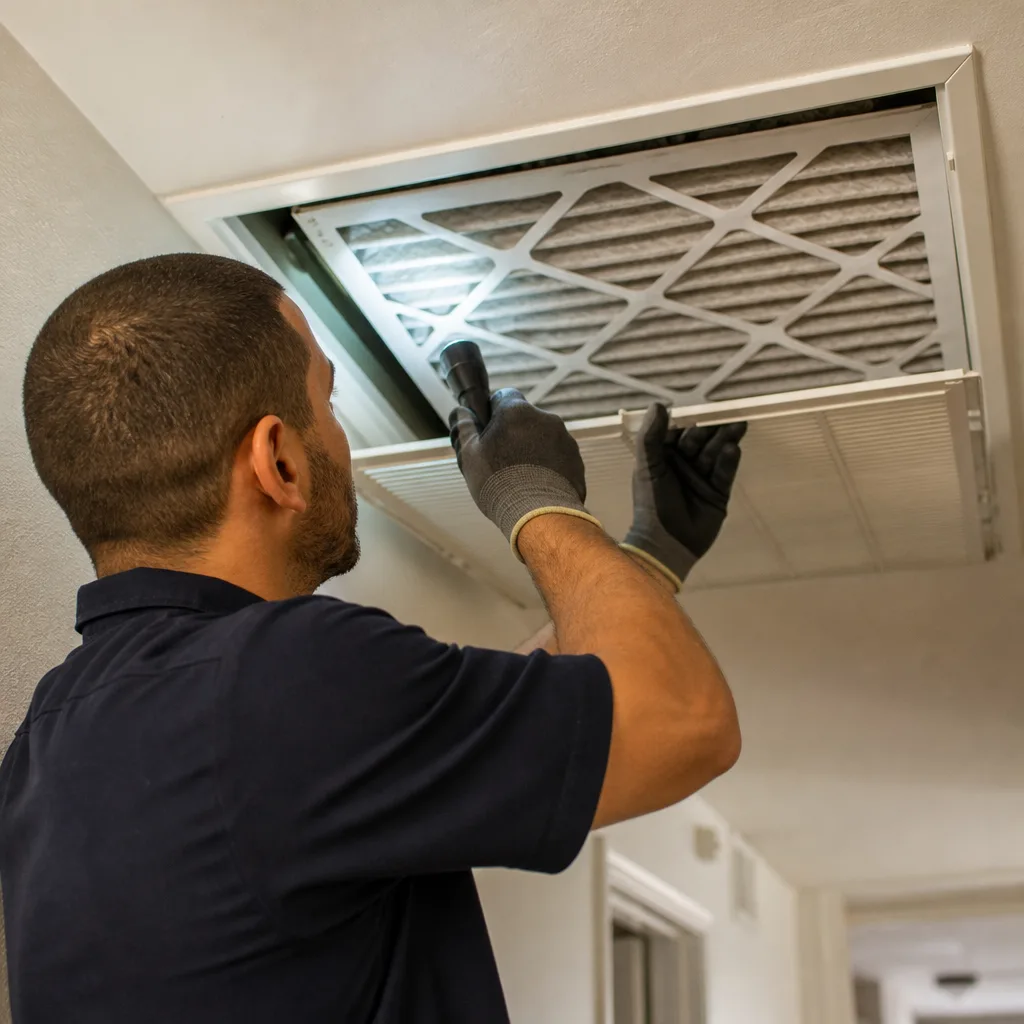
Here’s the short version: a capacitor is a small cylinder inside your outdoor condensing unit that stores and releases electricity to start the compressor and fan motor. When it fails, your Trane either won’t start at all or starts hard and runs hot. In Las Vegas, where air conditioners run hard from May through September, capacitors fail more often than in milder climates. Heat is the enemy, and the inside of a condensing unit on a 110-degree day is brutal territory for electrical components.
If your Trane is showing any of the symptoms below, call us at (725) 502-1353. We’ll tell you what’s wrong and quote you a written price before we touch anything.
Which Trane Models This Applies To
The capacitor replacement process we’re describing applies to nearly every residential Trane air conditioner and heat pump built in the last 25 years. That includes the XR series (XR13, XR14, XR15, XR16, XR17), the XL series (XL14i, XL15i, XL16i, XL18i, XL20i), and the current XV line. It also covers Trane packaged units and most Trane heat pumps, including the XR and XL heat pump lines.
Now, the compatibility gotcha most people miss: Trane units typically use either a dual-run capacitor (one cylinder that serves both the compressor and the fan motor) or separate run capacitors for each. The dual-run setup is the most common, and it’s the one that fails most often. Pay attention to the label on your old capacitor because it lists three numbers: the microfarad (µF) rating for the compressor, the µF rating for the fan, and the voltage tolerance, usually 370V or 440V. A 440V capacitor can always replace a 370V, but not the other way around.
The second gotcha: Trane units from the mid-2000s often shipped with capacitors rated at 370V. If your outdoor unit sits in full sun on the west side of a Las Vegas house, replacing that with a 440V capacitor adds meaningful heat tolerance. We keep both on the truck.
On the OEM-versus-aftermarket question: Trane-branded capacitors are made by the same tier-one suppliers that make quality aftermarket replacements like AmRad, Titan HD, or Genteq. The difference is price and packaging. We install capacitors rated for outdoor condensing-unit duty, not bargain-bin equivalents, because in Las Vegas heat that difference shows up fast. A cheap capacitor can fail in under two years. A proper one should last five to seven.
One more thing worth stating plainly: Brandt HVAC Co Las Vegas is an independent service provider. We are not affiliated with Trane, and we don’t pretend to be. We just fix their equipment, and we’ve seen enough of it to know exactly what it needs.
Styles & brands we work with
Signs Your Trane Capacitor Replacement Is Failing
Capacitors rarely fail without warning. Here are the five symptoms we see most often in Las Vegas:
- The outside unit hums but the fan doesn’t turn. This is the classic dead-capacitor signature. The compressor is pulling power but can’t start, and that hum is the motor locked up electrically, not mechanically. Left running like this, the compressor can overheat and trip its thermal limit, or worse, burn out.
- The compressor starts, then stops, then tries again. You’ll hear a click, a brief hum, maybe a faint rattle, then silence. Thirty seconds later it repeats. That’s the capacitor trying and failing to deliver the start-up surge the compressor needs. Every failed start puts wear on the windings.
- The fan turns slowly or needs a push to get going. If you can spin the fan blade with a stick and it kicks on, the fan side of your dual-run capacitor is dying. The capacitor is no longer storing enough charge to overcome inertia on its own.
- Your energy bill climbs while cooling drops. A weak capacitor makes the compressor run hotter and draw more current. The system still cools, but it’s working harder than it should. Over a Las Vegas summer, that inefficiency shows up as real money.
- The top of the capacitor is domed or leaking oil. Capacitors contain a dielectric fluid. When they overheat internally, the casing swells or splits. If you open the panel and see a bulged top or oily residue, that part is done.
If you’re seeing any of these, don’t keep running the system. A failing capacitor stresses the compressor, and a compressor replacement is a $2,000-plus job. The capacitor is a $20 to $60 part. That math works in one direction.
See the difference
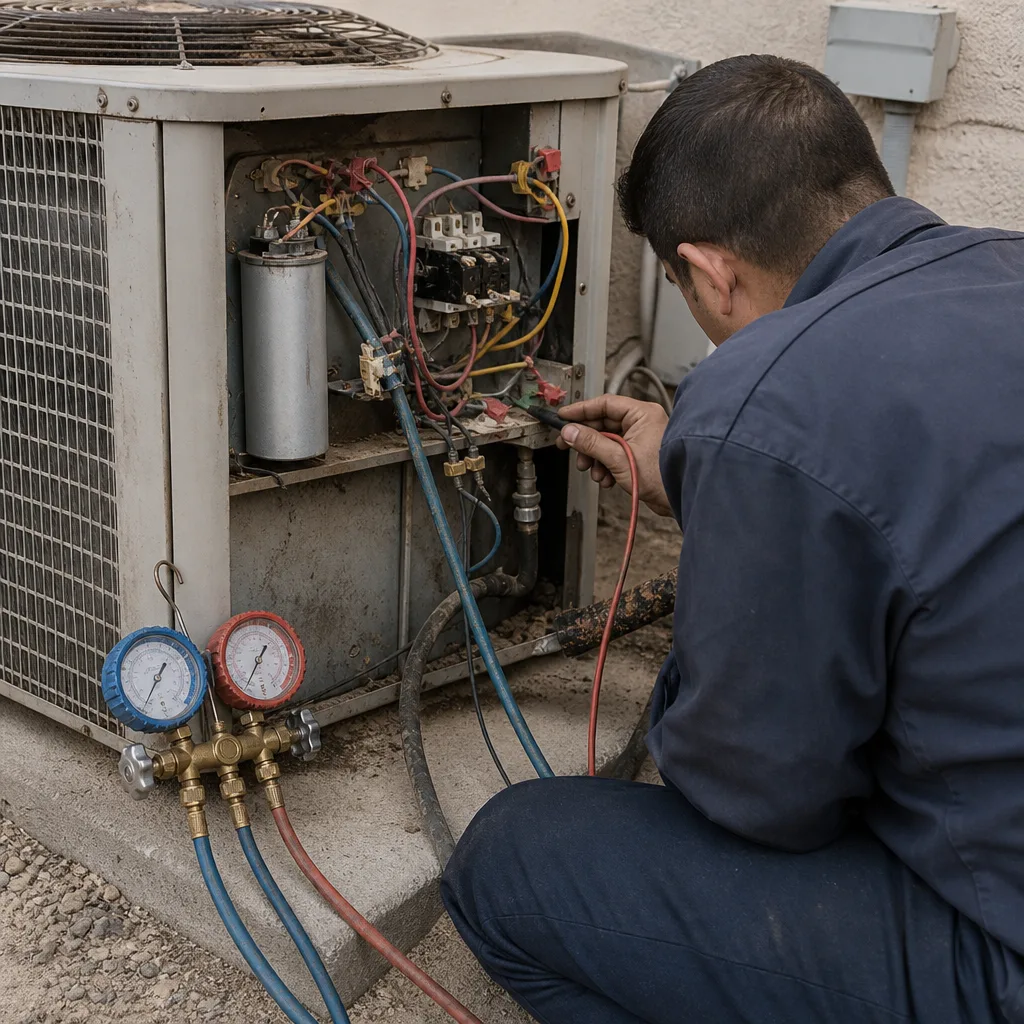 Before
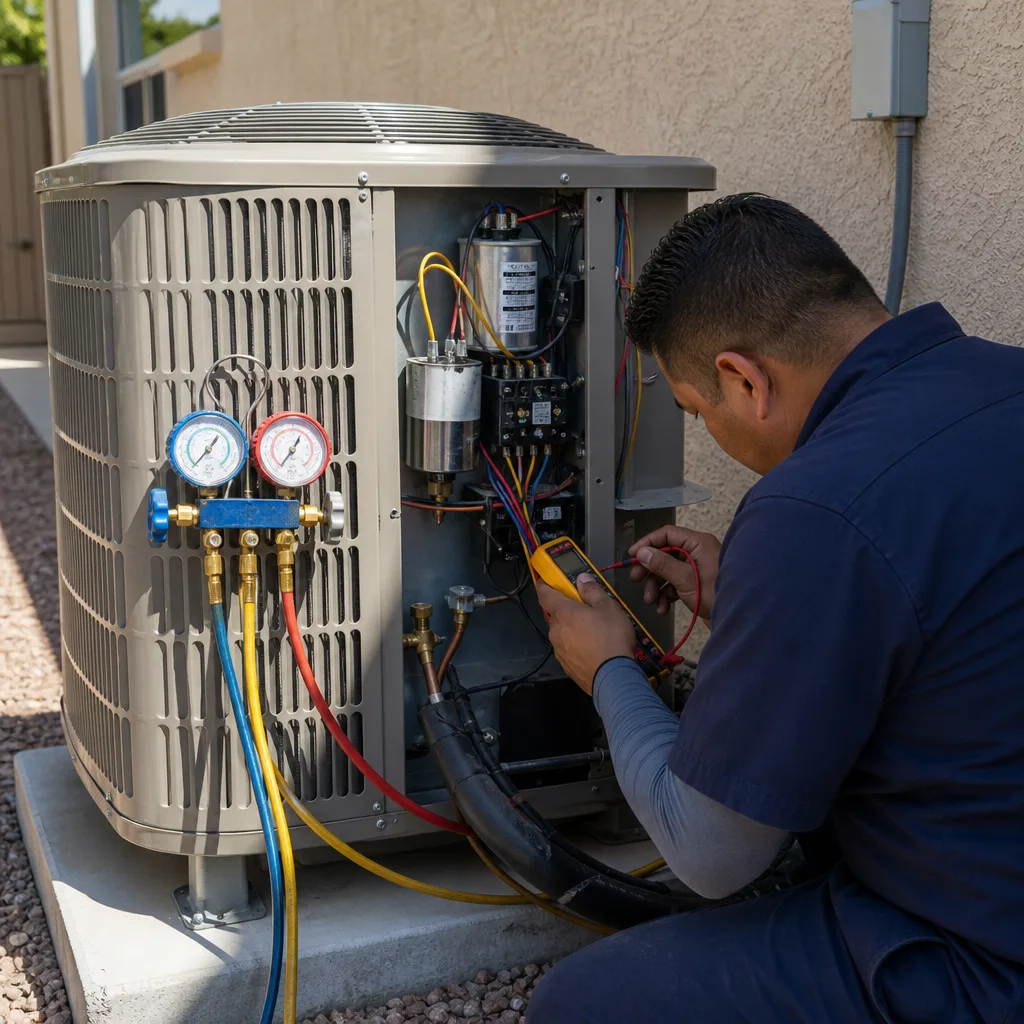 After
After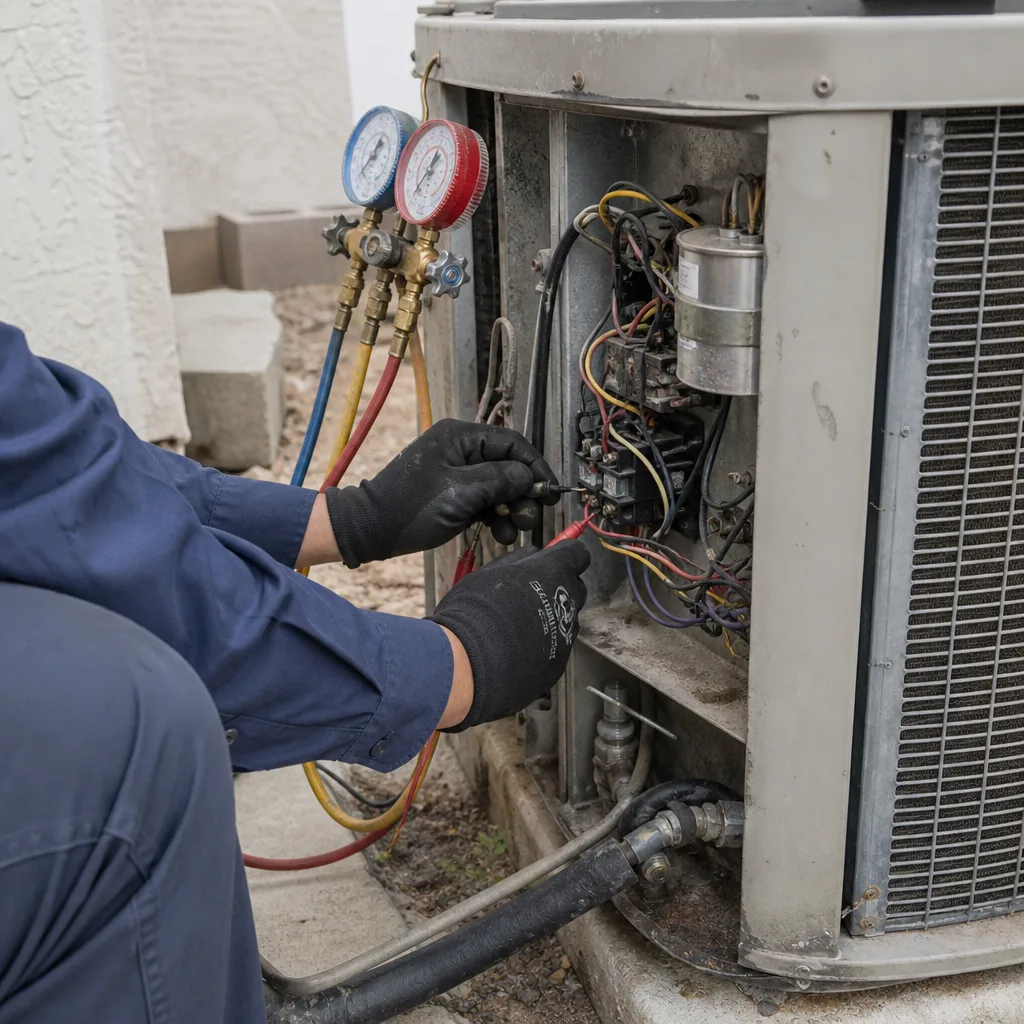 Before
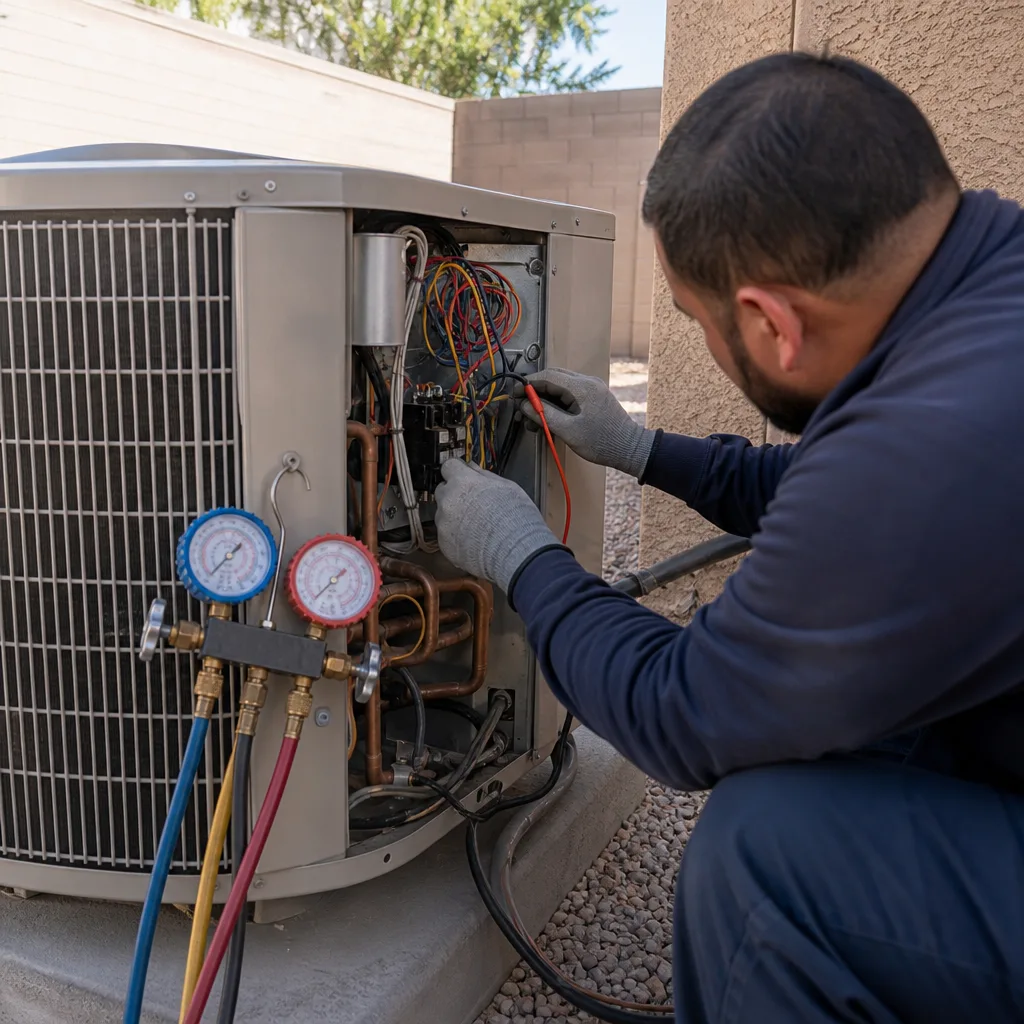 After
After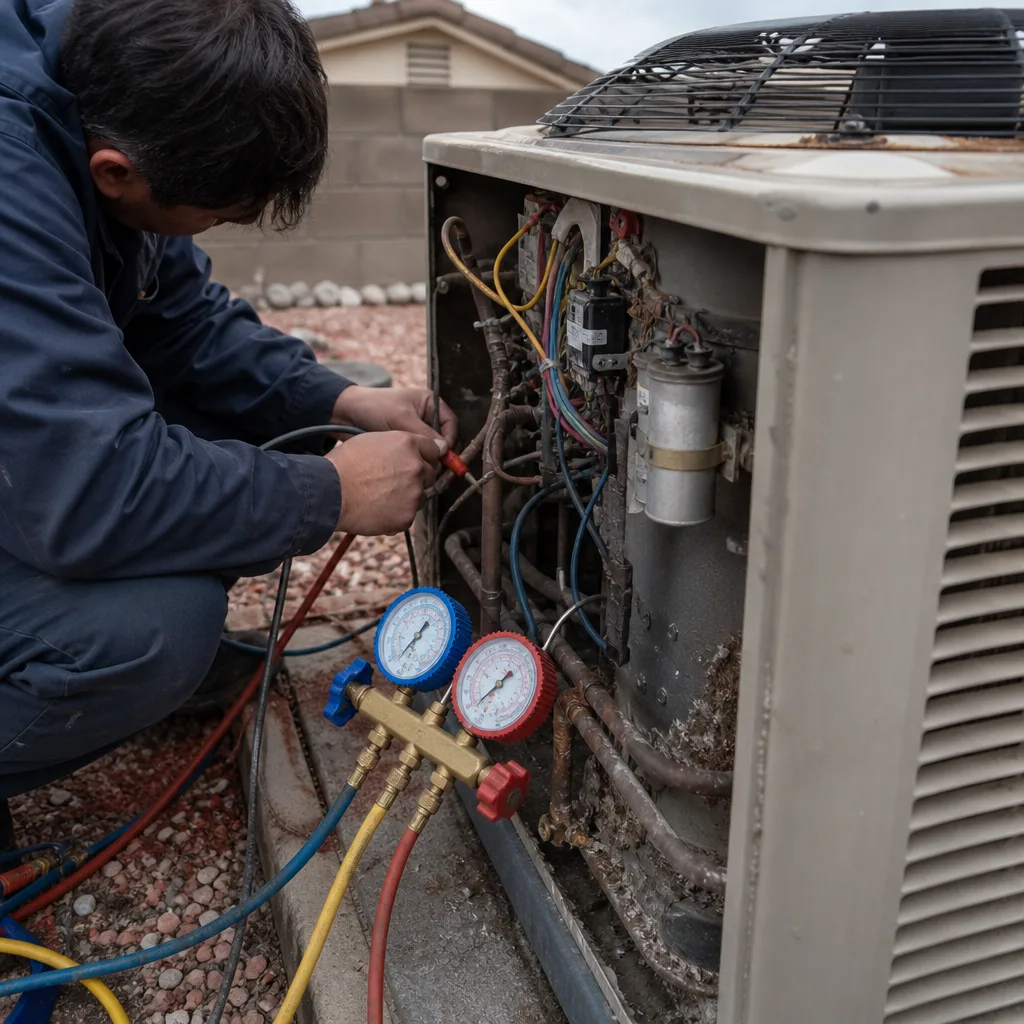 Before
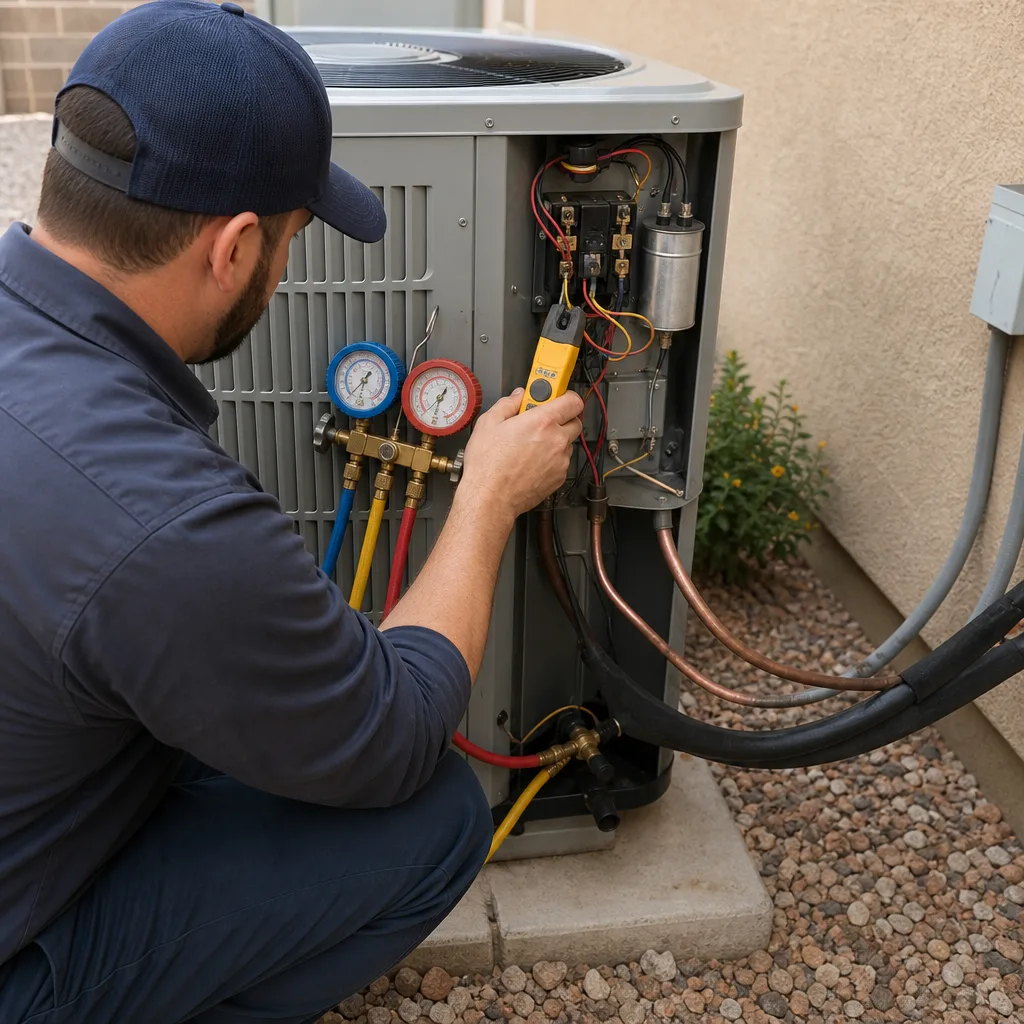 After
AfterReplacement Cost & What’s Included
For Las Vegas homeowners, a Trane capacitor replacement runs $180 to $340 installed. That includes the service call, the capacitor itself, the labor to install it, and a full test of the system after the swap to confirm the compressor and fan are pulling the right amperage.
What drives the range? Three things. First, the capacitor type: a single-run capacitor typically sits at the lower end, while a dual-run with a 440V rating runs toward the middle. Second, access: most Trane condensing units have straightforward panel access, but units crammed into tight side yards or behind shrubs take longer and cost a bit more. Third, whether we find anything else wrong while we’re in there. A burned contactor or a pitted wire terminal commonly rides along with a failed capacitor, and we’ll show you the problem and quote it separately before doing anything.
Here’s what you get on every capacitor replacement from us:
- A written price before we start, no exceptions
- A capacitor rated for your specific Trane model and the Las Vegas heat load
- Torque-checked terminals and a clean contactor inspection
- A system start-up test with amp draw confirmation
- A written guarantee: the repair is covered for 365 days under our Done Right Promise. If the capacitor fails within that year, we return and replace it at no charge, no argument.
Devin Marlowe explained it to a homeowner in Summerlin last week this way: “Tell me what it is doing, I will tell you what it needs, no guessing, no padding the invoice.” That’s how every job goes.
DIY or Call Us?
Let’s be straight about the safety part first: capacitors store a serious electrical charge even when the power is off. A charged capacitor can release that voltage in an instant, and it doesn’t care whether you remembered to flip the breaker. The right way to handle one is to discharge it with a proper resistor tool while wearing insulated gloves, and to know exactly which terminals hold voltage. If you’re not completely comfortable around live electrical components, this is not the job to learn on.
What a homeowner can safely check: look at the capacitor through the outside unit’s panel without touching anything. If you see a domed top, a split casing, or oil leaks, you’ve found the problem. You can also verify that the thermostat is calling for cooling and that the breaker hasn’t tripped. Beyond that, we’d rather you leave the electrical work to someone who does it daily.
One real-world note from our calls across Las Vegas and the surrounding valley: we’ve shown up after a few DIY capacitor swaps where the homeowner bought a cheap capacitor online that didn’t match the original µF rating. The unit ran for a few weeks, then the compressor started short-cycling. Matching the rating exactly matters. If you’re inclined to buy the part yourself, at least send us a photo of the label first. It costs nothing to ask.
Or simpler: call us at (725) 502-1353. We bring the right part, we show you the written price before the work starts, and the repair is guaranteed for a full year.
FAQs
In the Las Vegas climate, a Trane capacitor typically lasts five to seven years, though units in full sun on a west-facing wall can look at four years or less. The extreme heat shortens capacitor life measurably, which is why we see more capacitor failures in July and August than any other months. If your capacitor was replaced more than five years ago and you’re hearing a hard start, it’s worth having us check it before it takes out something more expensive.
No. A capacitor is a sealed component, and once it degrades, fails, or leaks, the only fix is replacement. There’s no rebuilding or refilling a capacitor. The good news is that a replacement capacitor is one of the least expensive parts in your Trane system, and the swap takes under an hour in most cases.
Most Trane capacitor replacements take 30 to 45 minutes from panel-off to panel-on, including discharging the old capacitor safely, swapping the part, torque-checking all connections, and running a full start-up test on the compressor and fan. Add a little time if the unit is in a tight spot or if we’re also cleaning the contactor while we’re in there. You’ll be back up and cooling the same visit.
Yes. Our trucks carry common Trane dual-run and single-run capacitor ratings, plus a range of aftermarket equivalents from suppliers like AmRad and Titan HD. We also stock compatible parts for Carrier and Lennox systems, so if your household has more than one brand installed, we can usually handle everything in one trip. If your Trane takes an unusual size, we can normally source it from a local supply house the same day.
No, capacitor replacement is a repair, not an efficiency upgrade, so it doesn’t qualify for utility rebates or manufacturer incentives. The financial benefit is avoiding a compressor failure. That’s the expensive part you’re protecting. Call (725) 502-1353 for an exact quote on your Trane system, estimates are free.
Written by Devin Marlowe, Owner, Brandt HVAC Co Las Vegas, serving Las Vegas and nearby areas.