
Last updated October 16, 2026
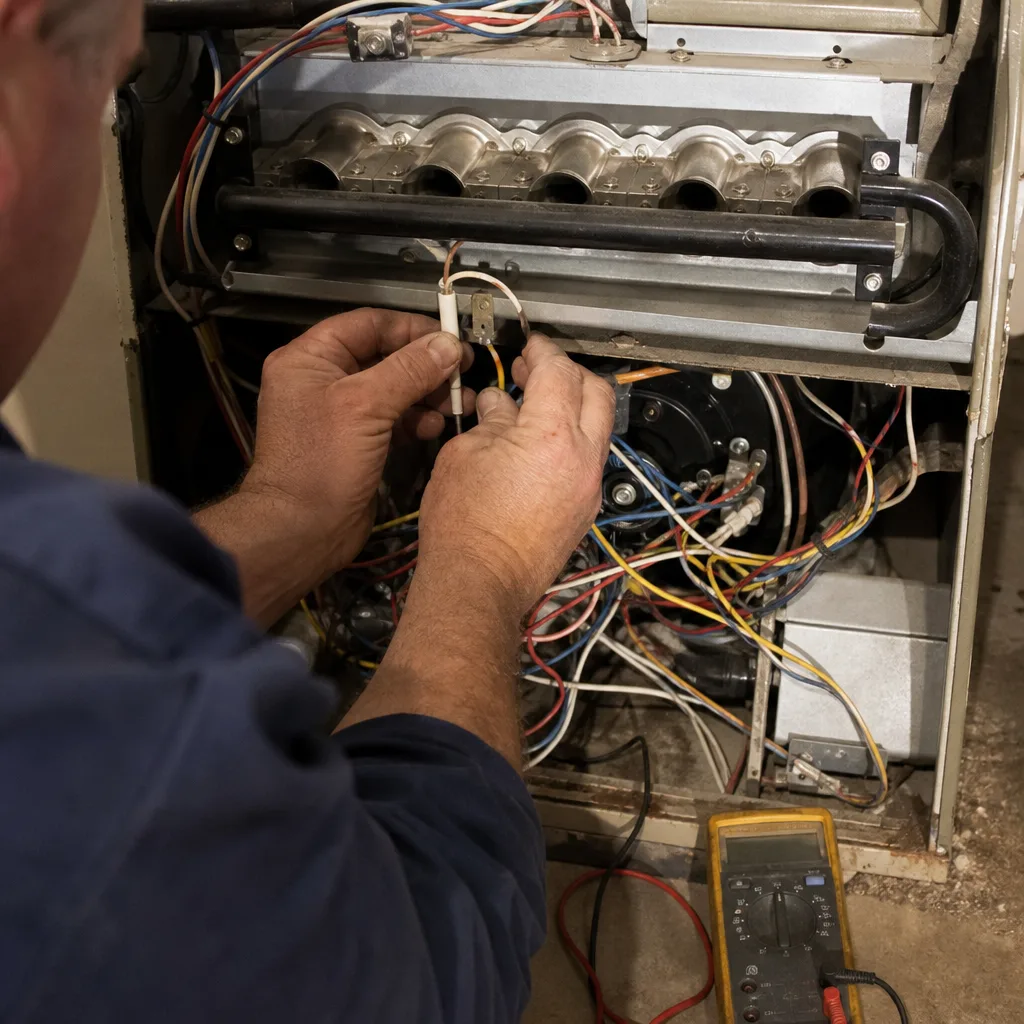
 AC repair
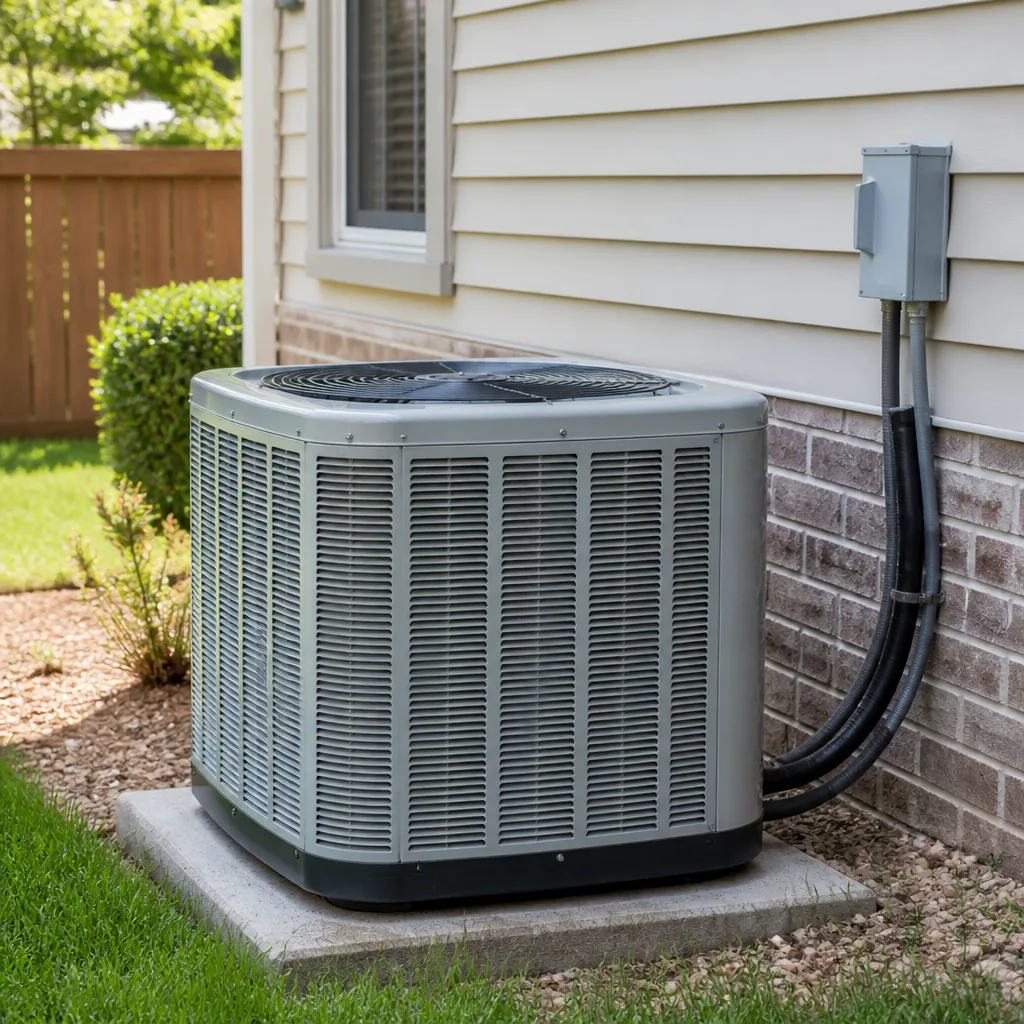
 Furnace & heating
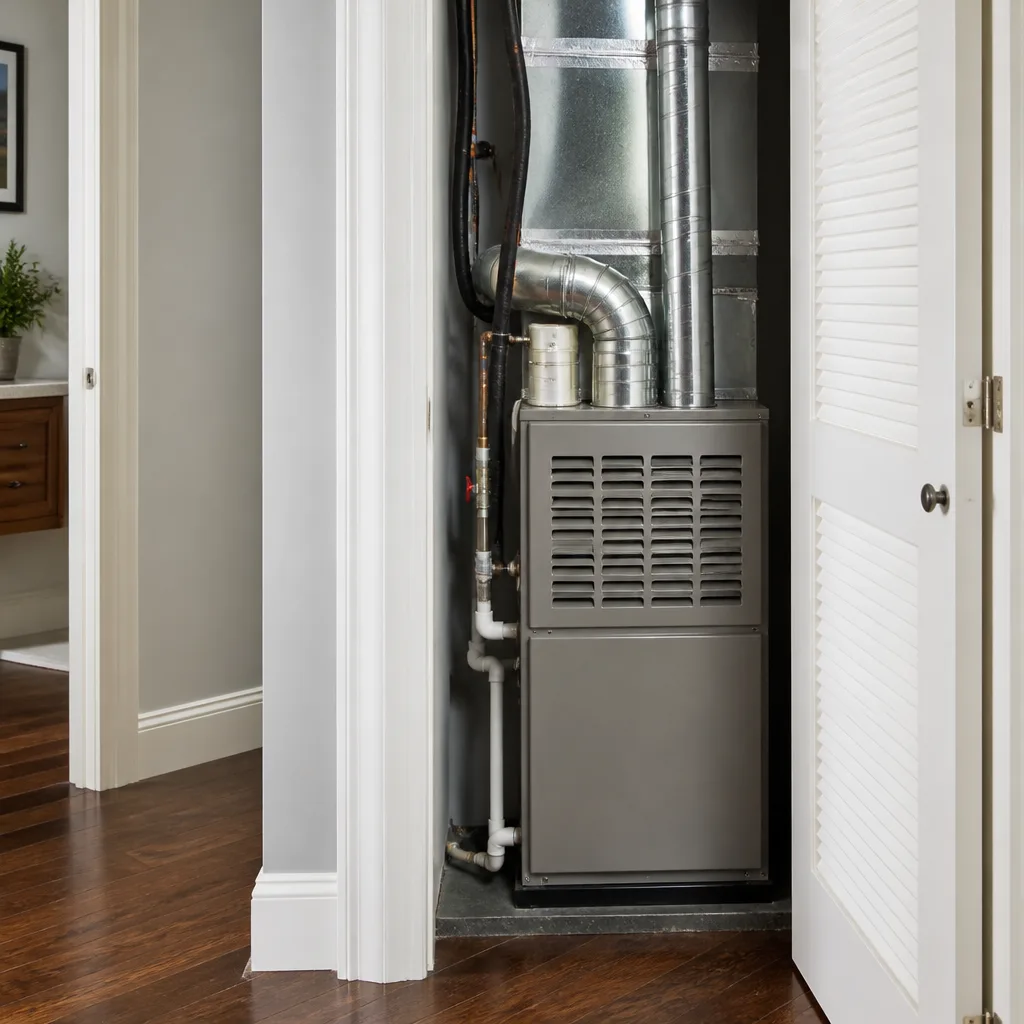
 Heat pumps
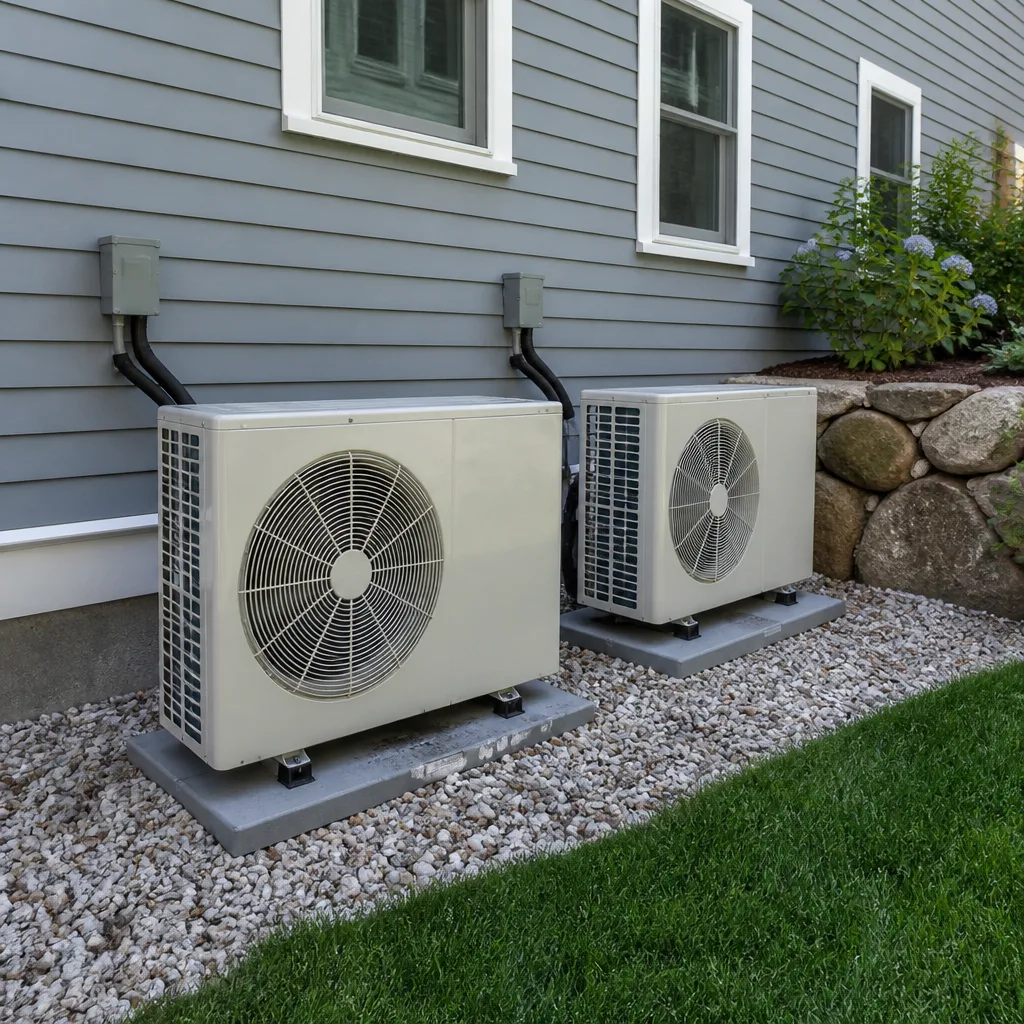
 Ductless mini splits
 Carrier
 Trane
Trane Goodman
Seasonal tune-up and full diagnostic on your Carrier, Trane, or Goodman system - readings shown to you before any repair is proposed
Diagnosis first, numbers second - you approve the repair price before a single part goes in.
Get your free estimateHow to Hire a HVAC Contractor in Las Vegas: A Step-by-Step Guide
In 2023, the Nevada State Contractors Board took disciplinary action against dozens of HVAC-related contractors operating in Las Vegas and across the state. That number only counts the ones who got caught. The unlicensed operators, the ones who disappeared after taking a deposit, the ones who left a family without air conditioning in July, never made it into a report. They never got reported because most homeowners don’t know how to check who they’re actually letting through the front door. This guide changes that. We’ll walk you through exactly how to verify a contractor’s license, what a real company’s pre-arrival process should look like, the three contract terms that protect you, and the red flags in quotes that signal a bait-and-switch before you ever sign anything.
Styles & brands we work with
Quick Answer
To hire an HVAC contractor in Las Vegas, start by verifying their Nevada C-21 refrigeration and air conditioning license on the Nevada State Contractors Board website, then confirm the company will send a technician whose name and photo you receive before arrival. Get a written, itemized price before any work begins, require a written scope of work with separate parts and labor warranties, and make sure the company has a written guarantee for what happens if the repair fails. Any company that pushes back on these four steps is telling you something important about how they do business.
Table of Contents
- Step 1: Verify the Nevada C-21 License Before You Call
- Step 2: Demand Technician Identity Before the Door Opens
- Step 3: The Three Contract Terms That Protect You
- Step 4: Red Flags in HVAC Quotes That Signal a Bait-and-Switch
- Step 5: How to Evaluate an Accountability Structure
- Step 6: Las Vegas Climate, Codes, and Pricing Realities
- Step 7: Questions to Ask Every Contractor Before You Commit
- Common Mistakes to Avoid
- When to Call a Professional
- Frequently Asked Questions
- The Bottom Line
Step 1: Verify the Nevada C-21 License Before You Call
Every contractor performing heating, air conditioning, and refrigeration work in Nevada must hold a C-21 license issued by the Nevada State Contractors Board (NSCB). This is not optional. It’s state law. The license exists to confirm the contractor has passed trade exams, carries workers’ compensation insurance, and has posted a bond that protects you if something goes wrong. But having a license number painted on the side of a van is not the same as having a valid license. In Las Vegas, we’ve seen vans with license numbers that belong to a different company, expired licenses, and suspended licenses where the contractor kept working until someone checked.
Here’s exactly how to verify a C-21 license on the NSCB website:
- Go to the Nevada State Contractors Board website and find the license search tool. It’s free and doesn’t require an account.
- Enter the contractor’s license number or the business name. Use the exact legal business name, not a DBA or marketing name, if you can. A company may advertise as “Cool Breeze Air” while their license is under “LV Climate Solutions LLC.”
- Look at the license status. A valid license shows “Active” in green. A suspended license shows “Suspended” in red, often with a note about why: failure to maintain a bond, disciplinary action, or an unpaid judgment.
- Confirm the license classification is C-21. Other classifications like C-1 (plumbing) or C-2 (electrical) do not authorize HVAC work. The classification field must say C-21, C-21A, or C-21B depending on the scope.
- Check the expiration date. Licenses expire and must be renewed. If the expiration date has passed, the license is not valid, even if the number still appears on the website.
- Look for disciplinary actions. The NSCB posts enforcement actions publicly. If a contractor has a history of citations for unlicensed activity, failure to pull permits, or abandoning jobs, that history lives on their license record.
A valid versus suspended license looks different on the NSCB portal. A valid license shows an active status with no pending actions. A suspended license typically shows a red banner or status field indicating the suspension and the reason. Some suspended contractors will tell you the suspension is “a paperwork issue.” It might be. But a suspended license means the contractor is not legally allowed to work in Nevada right now. You should not hire them until the suspension is lifted and you can verify it yourself.
We recommend checking the license before you call for a quote, not after the technician is standing in your living room. It takes five minutes. It’s the single highest-value step in this entire guide. At Brandt HVAC Co Las Vegas home, our license is posted on our website and we’ll walk you through the lookup if you want to verify it yourself. A contractor who gets defensive when you ask about license verification is a contractor you shouldn’t hire.
Step 2: Demand Technician Identity Before the Door Opens
Here’s a question most homeowners never think to ask: who, exactly, is coming to my house? In Las Vegas, where thousands of service calls happen every day, most homeowners open the door to a stranger in a uniform and hope for the best. A polo shirt with a logo is not identity verification. Anyone can buy a shirt. A real HVAC company should be able to tell you the technician’s name and show you a photo before that person ever rings your doorbell.
We built our entire process around this idea because we heard the same concern from Las Vegas homeowners again and again: “I don’t know who’s going to show up.” So we changed the way the visit starts. Every Brandt HVAC technician goes through a background check and identity verification before they’re assigned to a call. That’s the Threshold Verified standard. Before each visit, we send the homeowner the technician’s name and photo. When the technician arrives, they show a photo ID badge at the door. If anyone shows up who you were not told to expect, that visit is on us. You don’t let them in. You call us and we make it right.
Why does this matter beyond peace of mind? Because the person inside your home has access to your family, your belongings, and your trust. Background checks aren’t universal in this industry. Some companies send subcontractors who were never vetted by anyone. Some use day labor during the summer rush. In Las Vegas, where summer AC demand creates enormous pressure to get bodies to doors, the temptation to cut corners on vetting is real.
When you’re interviewing contractors, ask this question directly: “Will you send me the technician’s name and photo before the appointment, and will the technician show a photo ID at the door?” Pay attention to the answer. A company with a real process will say yes immediately because they already do it. A company that hesitates, laughs it off, or says “we’ll see who’s available” is telling you they don’t have a system. And a company without a system for knowing who’s at your door is a company without accountability.
This matters even more for homeowners who are often home alone, parents with young children, and older adults in Las Vegas. The decision to let a stranger into your home shouldn’t be made at the moment the doorbell rings. It should be made in advance, with full information. That’s what a real pre-arrival process looks like.
Step 3: The Three Contract Terms That Protect You
Most HVAC disputes in Las Vegas come down to one thing: the homeowner and the contractor had different understandings of what was supposed to happen. The work was verbal. The price was verbal. The warranty was verbal. When something went wrong, the homeowner had no written agreement to enforce. Three contract terms solve most of these problems before they start.
1. A written scope of work. Before any repair begins, the contract should state exactly what will be done. Not “fix the AC” but “replace the dual-run capacitor on the condenser unit, test system operation, and verify refrigerant charge.” This prevents the contractor from doing unapproved extra work and billing you for it later. It also gives you a document to compare against the final invoice. If the scope of work says one thing and the technician did something else, you have a written record.
2. Parts warranty separate from labor warranty. Most manufacturers warrant their parts. That warranty covers the component itself, not the labor to install the replacement. A real HVAC contract should state the parts warranty and the labor warranty separately. For example: “Compressor covered by manufacturer warranty for 10 years. Labor covered by contractor for 1 year.” At Brandt HVAC, every repair includes a written guarantee that states exactly what it covers and for how long. For example, a repair is guaranteed for 365 days. If it fails within that period, we return at no charge. That’s the 365-Day Done Right Promise. No argument, no additional fee.
3. A not-to-exceed price clause. This one prevents the most common complaint we hear in Las Vegas: “They said it would be $300 and then the bill was $800.” A not-to-exceed clause means the contractor cannot bill you more than a stated amount without your written approval. If the technician finds additional problems during the repair, they must stop, explain the situation, and get your signature on a new price before continuing. This is what we mean by no-hassle upfront pricing: a written price before any work starts, on every single job. You see the number. You agree to it in writing. Then the work begins.
If a contractor won’t put these three terms in writing, don’t hire them. It doesn’t matter how good their Google reviews are or how friendly the salesperson seemed on the phone. A verbal contract in Las Vegas heat is not a contract. It’s a hope.
Step 4: Red Flags in HVAC Quotes That Signal a Bait-and-Switch
Bait-and-switch pricing in HVAC works like this: the quote gets you in the door with a low number, then the technician “discovers” problems that balloon the final bill. In Las Vegas, where summer demand creates desperation, these tactics are common. Here are the red flags to watch for in your quote:
- “Refrigerant recharge” with no leak test. Refrigerant doesn’t get used up. If your system is low, there’s a leak. Recharging the refrigerant without finding and fixing the leak means you’ll pay for another recharge in a few weeks. A legitimate contractor will test for leaks before refilling. A quote that offers a recharge without mentioning leak detection is designed to generate a repeat visit.
- “Free inspection” that always finds $2,000 in problems. A free inspection is a sales call, not a diagnostic. Some Las Vegas companies use the free visit to find a long list of “urgent” repairs, often with a discount if you sign today. A real diagnostic involves testing, measurement, and a written explanation of what’s actually wrong. If the free inspection always finds the same dollar amount of work, you’re looking at a script, not a diagnosis.
- Verbal-only pricing. If the technician quotes you a price out loud but won’t put it on paper, you have no evidence of what was agreed. When the bill comes in higher, it’s your word against theirs. In Las Vegas, where many contractors are from out of state or operate under multiple names, a verbal price is worthless. Demand a written price. Every time.
- Vague line items like “AC repair” or “system service.” A real quote should itemize the work. “AC repair” could mean anything from a $15 capacitor to a $1,500 compressor replacement. If the contractor won’t specify what they’re doing, they’re keeping the door open to do less and charge more.
- Pressure to decide immediately. “This price is only good while I’m here” is a sales tactic, not a service policy. A legitimate contractor’s price doesn’t expire when the technician walks out the door. We give written prices that stand, because we want you to compare and think about it. If a company needs you to decide before you can verify their license or read their contract, walk away.
- No mention of permits. In Las Vegas, certain HVAC work requires a permit through the city or Clark County. A contractor who says permits aren’t needed when the work clearly requires one is either unlicensed, trying to cut costs, or both. The NSCB takes permit violations seriously, and unpermitted work can create problems when you sell your home.
One more thing: you should expect a quote to include the brand of equipment being installed or the brand of replacement part being used. Generic wording like “premium compressor” or “high-efficiency unit” without a brand name is a red flag. We service all major residential HVAC brands including Carrier, Trane, Lennox, and Goodman, and our quotes name the exact part and manufacturer. If the quote won’t say what you’re buying, you can’t compare it to anything else.
Step 5: How to Evaluate an Accountability Structure
When an HVAC job goes wrong, the difference between a minor inconvenience and a nightmare comes down to the company’s accountability structure. By that we mean the systems the company has in place for communication, verification, and fixing mistakes. Here’s how to evaluate a company before you ever hand over a deposit.
Dispatcher communication. Call the company and see what happens. Does a live person answer? In Las Vegas, many HVAC companies route calls to voicemail or an automated phone tree, especially during the summer rush. If you have an AC failure in July and call a company that sends you to voicemail, you’re not really hiring a service company. You’re hiring a callback queue. We staff our phones with a live person 24 hours a day, 7 days a week. Nights, weekends, holidays. No voicemail, no callback queue. If a company can’t answer the phone when you’re trying to give them money, how responsive will they be when you have a problem?
Technician background verification. We covered this in Step 2, but it bears repeating: the accountability structure includes knowing who your technicians are. Ask about background checks. Ask about drug testing. Ask about identity verification. A company that can’t answer these questions doesn’t have an answer.
What happens when the work is wrong. Every contractor makes mistakes. The question is what happens next. Ask directly: “If the repair fails, what’s your process?” A real answer includes a written guarantee with a specific duration, a commitment to return and fix the problem, and no additional charge. A vague answer (“we’ll take care of you”) means you’ll be negotiating when the system fails again. Under the 365-Day Done Right Promise, if a Brandt HVAC repair fails within the guarantee period, we return free of charge. That’s the whole structure. It’s written down, not depending on who you talk to on the phone.
Deposit policies. Be cautious about large upfront deposits for repair work. For a standard repair like a AC repair in Las Vegas, most companies don’t require a deposit at all. You pay when the work is done. For equipment replacement, a deposit is normal, but it should be reasonable and accompanied by a written contract with an installation date. If a company wants 50% down on a repair, something is wrong.
Part of accountability is also being part of a larger organization with standards. Brandt HVAC is part of the Threshold Group family of home-service companies, established in 2003. Each location is independently owned and operated, which means the local owners are accountable to their customers and their community, not a distant corporate office. That structure matters when you’re deciding who to trust with your home.
Step 6: Las Vegas Climate, Codes, and Pricing Realities
Hiring an HVAC contractor in Las Vegas is different from hiring one in Minneapolis or Seattle. The climate shapes the market, the pricing, and the urgency of the work. Here’s what you need to understand about this specific market.
Climate. Las Vegas summers routinely hit 110 degrees or higher, and the heat doesn’t just make you uncomfortable. It’s dangerous. A failed air conditioner in July is a health risk, especially for older adults, young children, and people with medical conditions. That’s why same-day AC repair in Las Vegas is not a luxury, it’s a necessity. This climate also means your AC system runs harder and longer than it would in most other cities. Components wear out faster. Refrigerant leaks are more common. The strain on the system means maintenance matters more, not less.
Codes and permits. Las Vegas follows the Clark County building codes, with some city-specific variations. HVAC work that involves replacing equipment, modifying ductwork, or running new electrical circuits typically requires a permit. The permit process exists to ensure the work is done to code and inspected. A contractor who tells you a permit isn’t needed for a full system replacement is either wrong or trying to avoid the inspection. Either way, that’s a problem for you down the road. When in doubt, call the city or county building department and ask.
Pricing realities. Las Vegas HVAC pricing reflects the local market. Here are realistic ranges for common work, based on what we see in this market:
- Service call / diagnostic fee: $75 – $125, often waived if you proceed with the repair.
- Capacitor replacement: $150 – $300, parts and labor included. This is one of the most common AC failures in Las Vegas heat.
- Condensate drain cleaning: $100 – $200. Clogged drain lines are common in our dry, dusty climate.
- Thermostat replacement: $150 – $350 depending on the model.
- Refrigerant recharge (with leak repair): $300 – $1,000 depending on the refrigerant type, leak location, and system size.
- Furnace igniter replacement: $150 – $300, parts and labor included.
- Furnace blower motor replacement: $400 – $900 depending on the motor type.
- Full AC system replacement: $6,000 – $14,000 depending on size, efficiency rating, and brand.
- Annual maintenance visit: $89 – $180. We recommend twice a year in Las Vegas, once before summer and once before winter.
These ranges are not quotes. Your exact price depends on your system, your home, and your specific situation. But they give you a benchmark so you can spot a price that’s wildly out of line. If someone quotes you $4,000 for a capacitor, they’re either incompetent or dishonest. If someone quotes you $50 for a capacitor, they’re losing money, which means they’ll find a way to make it up elsewhere. At Brandt HVAC, we give you a written price before any work starts. You see the exact number. You agree to it in writing. Then we do the work.
Step 7: Questions to Ask Every Contractor Before You Commit
By now you have a framework for evaluating contractors. Here are the specific questions to ask, in order, when you’re comparing companies in Las Vegas:
- “What is your Nevada contractor license number?” Write it down. Verify it on the NSCB website before the appointment. If they won’t give it to you, end the conversation.
- “Will you send me the technician’s name and photo before the visit, and will they show a photo ID at the door?” This tells you whether the company has a real identity-verification process or just hopes for the best.
- “Do you provide a written price before any work begins?” The answer should be an immediate yes. Written price before work starts, always, on every job, with no exceptions.
- “What does your written guarantee cover, and for how long?” Get specifics. “Guaranteed for 365 days” is a real answer. “We stand behind our work” is not.
- “If the repair fails, what happens?” The answer should be: free return visit, no argument, covered by a written promise. If the company hesitates, that’s your answer.
- “What brands do you service?” A real company services multiple brands. We service all major residential HVAC brands including Carrier, Trane, Lennox, and Goodman, plus Rheem, York, Daikin, Bryant, and American Standard. A company that only “specializes” in one brand may be limited in what they can actually fix.
- “Do you have a live person answering the phone 24/7?” In Las Vegas, where a furnace failure in January or an AC failure in July can be urgent, this matters. If you call at midnight and get voicemail, you don’t have a 24-hour company.
- “Is this work going to require a permit?” A contractor who knows the local codes will give you a straight answer. A contractor who waves off the question is either unlicensed or cutting corners.
One thing we want to be clear about: you don’t need to interrogate a company for an hour. These questions should take ten minutes. A good company answers them easily because the answers are already built into how they operate. A company that gets defensive, evasive, or vague is showing you exactly how they’ll behave when there’s a problem.
Common Mistakes to Avoid
- Hiring based on price alone. In Las Vegas, the cheapest quote is often the most expensive in the long run. A low price means cutting corners somewhere: unlicensed labor, no permit, cheap parts, or no warranty. When the system fails in August, you’ll pay twice.
- Not verifying the license. Most homeowners never check. The Nevada State Contractors Board makes it free and simple. Skipping this step is like buying a car without checking if the seller owns it.
- Letting the technician on the property without confirming identity. You wouldn’t let a stranger into your home in any other context. Don’t let a uniform be the only verification. Demand a name and photo before arrival and a photo ID at the door.
- Accepting a verbal price. If it’s not written down, it didn’t happen. Verbal pricing is the single biggest source of HVAC disputes in Las Vegas. Get every price in writing before work begins.
- Paying everything upfront. A large deposit before the work is done leaves you with no leverage if the contractor disappears or does poor work. For repairs, pay when the job is complete. For replacements, expect a reasonable deposit with a written installation date.
- Skipping annual maintenance. In Las Vegas, the heat punishes neglected systems. Regular AC maintenance in Las Vegas catches problems before they become failures. Skipping it doesn’t save money, it just moves the cost into a hot afternoon in July.
- Ignoring the contract terms. A written scope of work, separate parts and labor warranties, and a not-to-exceed clause protect you when things go wrong. If the contract doesn’t have these, don’t sign it.
When to Call a Professional
Some HVAC issues are straightforward enough to handle yourself: changing a filter, clearing debris from around the outdoor unit, checking that the thermostat is set correctly. Beyond that, you’re dealing with high-voltage electrical components, pressurized refrigerant, and gas lines if you have a gas furnace. These are not DIY territory. A wrong move with a capacitor or a refrigerant line can cause injury or make the problem worse. If your system is short-cycling, making unusual noises, blowing warm air, leaking water, or producing a burning smell from the vents, shut it off and call a licensed contractor. If your furnace won’t ignite or is producing a gas smell, that’s an immediate call. Furnace repair in Las Vegas isn’t a project, it’s a safety issue. Brandt HVAC Co Las Vegas offers free estimates in Las Vegas – call (725) 502-1353 and a live person will answer.
Frequently Asked Questions
Go to the Nevada State Contractors Board website and use their free license search tool. Enter the contractor’s license number or legal business name, confirm the status is “Active,” verify the classification is C-21 (refrigeration and air conditioning), and check for any disciplinary actions or expired status. A suspended or expired license means the contractor cannot legally perform HVAC work in Nevada.
Most common AC repairs in Las Vegas run between $150 and $1,000 depending on the component. Capacitor replacements typically cost $150 – $300, refrigerant recharges with leak repair run $300 – $1,000, and full system replacements start around $6,000. Always get a written price before any work begins. For an exact quote on your system, call (725) 502-1353 – estimates are free.
The general rule: if the repair costs less than 30% of a new system and your system is under 10 years old, repair it. If your system is over 12 years old, uses R-22 refrigerant, or has a failed compressor, replacement is usually the better long-term investment. A licensed contractor can give you a written recommendation with actual numbers for your specific scenario.
Most equipment replacements and significant modifications require a permit through the city of Las Vegas or Clark County. Simple repairs like capacitor or thermostat replacement typically don’t. Ask your contractor directly whether the work requires a permit. A licensed contractor will know and will handle the permit process for you.
A genuine emergency-response company will have a live person answering the phone at all hours and can typically schedule same-day service for urgent AC failures. That said, during extreme heat waves, every reputable company gets busy. Your best protection is an annual maintenance visit before summer hits, so your system is less likely to fail during peak demand. Call (725) 502-1353 to schedule service in Las Vegas.
We service all major residential HVAC brands including Carrier, Trane, Lennox, Goodman, Rheem, York, Daikin, Bryant, and American Standard. Our technicians are trained on multiple platforms, which means we can diagnose and repair almost any residential system without waiting for a brand-specific specialist.
The Bottom Line
Hiring an HVAC contractor in Las Vegas is a trust decision before it’s a price decision. Verify the C-21 license on the NSCB website. Demand technician identity before the door opens, with a name and photo sent in advance and a photo ID shown at arrival. Get three things in writing: a scope of work, separate parts and labor warranties, and a not-to-exceed price. Watch for the bait-and-switch red flags: refrigerant recharges with no leak test, free inspections that always find $2,000 in problems, and verbal-only pricing. Evaluate the accountability structure: who answers the phone, who’s been background-checked, and what happens when the work is wrong. Do these things, and you’ll hire with certainty instead of hope. That’s what we built Brandt HVAC to provide.
Call (725) 502-1353 for a free estimate in Las Vegas. A live person answers, 24 hours a day.
Written by Devin Marlowe, Owner at Brandt HVAC Co Las Vegas, serving Las Vegas since 2003.
See the difference
 Before
 After
After Before
 After
After Before
 After
After