
Last updated October 16, 2026
 AC repair
 Furnace & heating
 Heat pumps
 Ductless mini splits
 Carrier
 Trane
Trane Goodman
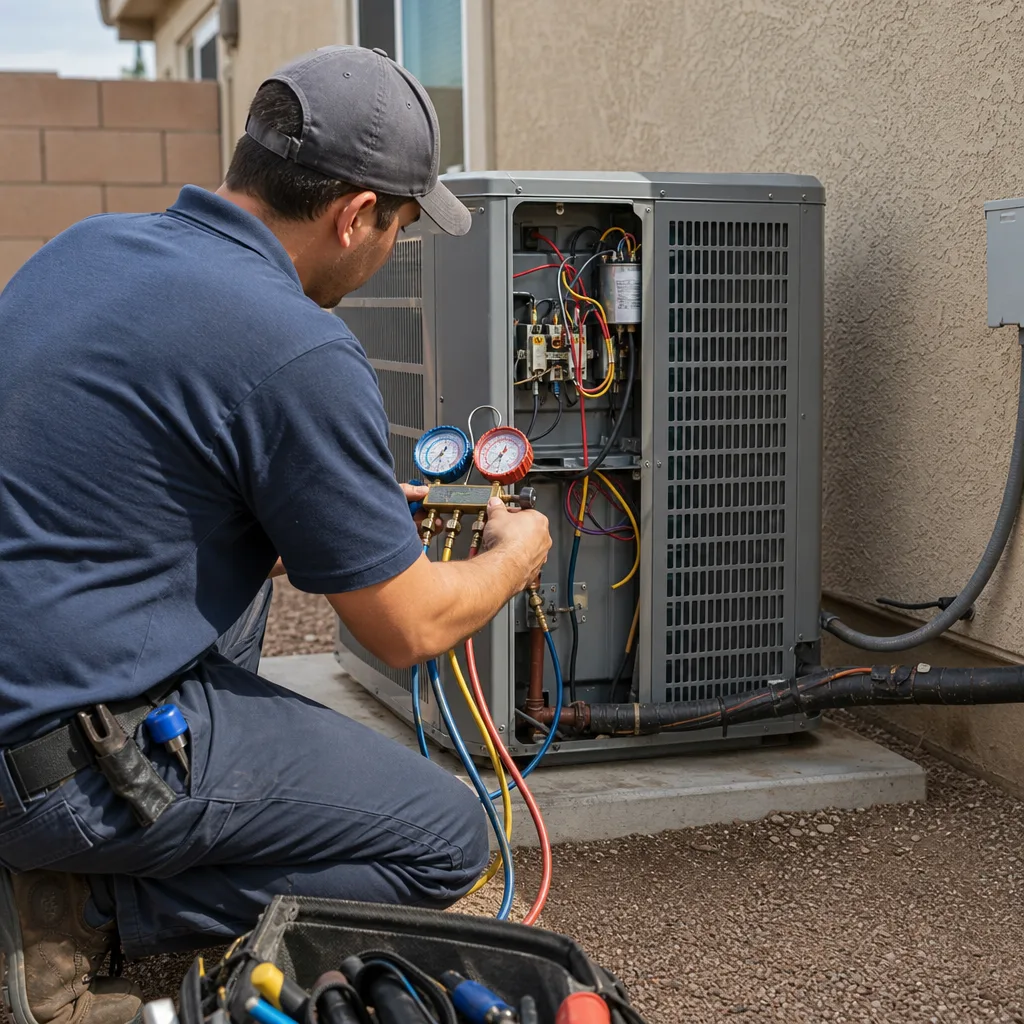
Seasonal tune-up and full diagnostic on your Carrier, Trane, or Goodman system - readings shown to you before any repair is proposed
Diagnosis first, numbers second - you approve the repair price before a single part goes in.
Get your free estimateSeasonal HVAC Care for Las Vegas: Year-Round Homeowner’s Guide
Las Vegas HVAC systems don’t fail randomly. They fail at predictable transition points in the year, and almost every breakdown we roll up to could have been caught in the two weeks before it happened. The reason is simple: a desert climate puts unique stress on air conditioning and heating equipment that a generic spring-and-fall maintenance checklist never addresses. This guide maps the four real phases of a Las Vegas HVAC year, what to do during each one, and how to decide whether a problem needs a professional or just a little attention from you-similar to what we cover in our DIY vs Professional HVAC: The Las Vegas Homeowner’s Decision Guide. By the time you finish reading, you’ll have a month-by-month plan that keeps your system running and your repair bills small.
Quick Answer
Year-round HVAC care in Las Vegas means following four service phases matched to the desert climate: a pre-cooling prep window in March and April, active monitoring from May through September, a monsoon recovery and heating check in October and November, and light heating-season vigilance from December through February. Most homeowners need two professional maintenance visits per year (one in spring, one in fall) plus monthly filter changes during peak months, as outlined in our AC Repair Maintenance Checklist for Las Vegas Homeowners. The payoff is fewer mid-July breakdowns, lower cooling bills, and a furnace that actually works when the temperature drops.
Styles & brands we work with
Table of Contents
- Phase 1: March – April – Pre-Season Preparation Before the Heat Arrives
- Phase 2: May – September – In-Season Monitoring and When to Wait vs. Call
- Phase 3: October – November – Monsoon Recovery and Heat System Readiness
- Phase 4: December – February – Desert Heating Season and Carbon Monoxide Vigilance
- Your 12-Month Las Vegas HVAC Calendar
- Common Mistakes to Avoid
- When to Call a Professional
- Frequently Asked Questions
Phase 1: March – April – Pre-Season Preparation Before the Heat Arrives
By mid-March, daytime temperatures in Las Vegas start creeping toward 80°F, and your air conditioner is about to go from dormant to running nearly non-stop for five months. The single smartest move a homeowner can make is to schedule AC maintenance in Las Vegas during this window. Here’s why: the condenser coil, the capacitor, and the refrigerant charge all degrade quietly while the system sits unused through winter. A capacitor that’s lost half its capacitance will still spin the fan on a mild March day, and you will not notice anything wrong. That same capacitor fails outright on a 110°F afternoon in July when the system is working at full load. In our experience, the cheapest repair is always the one scheduled before the failure, not after.
Specific tasks that matter in this phase:
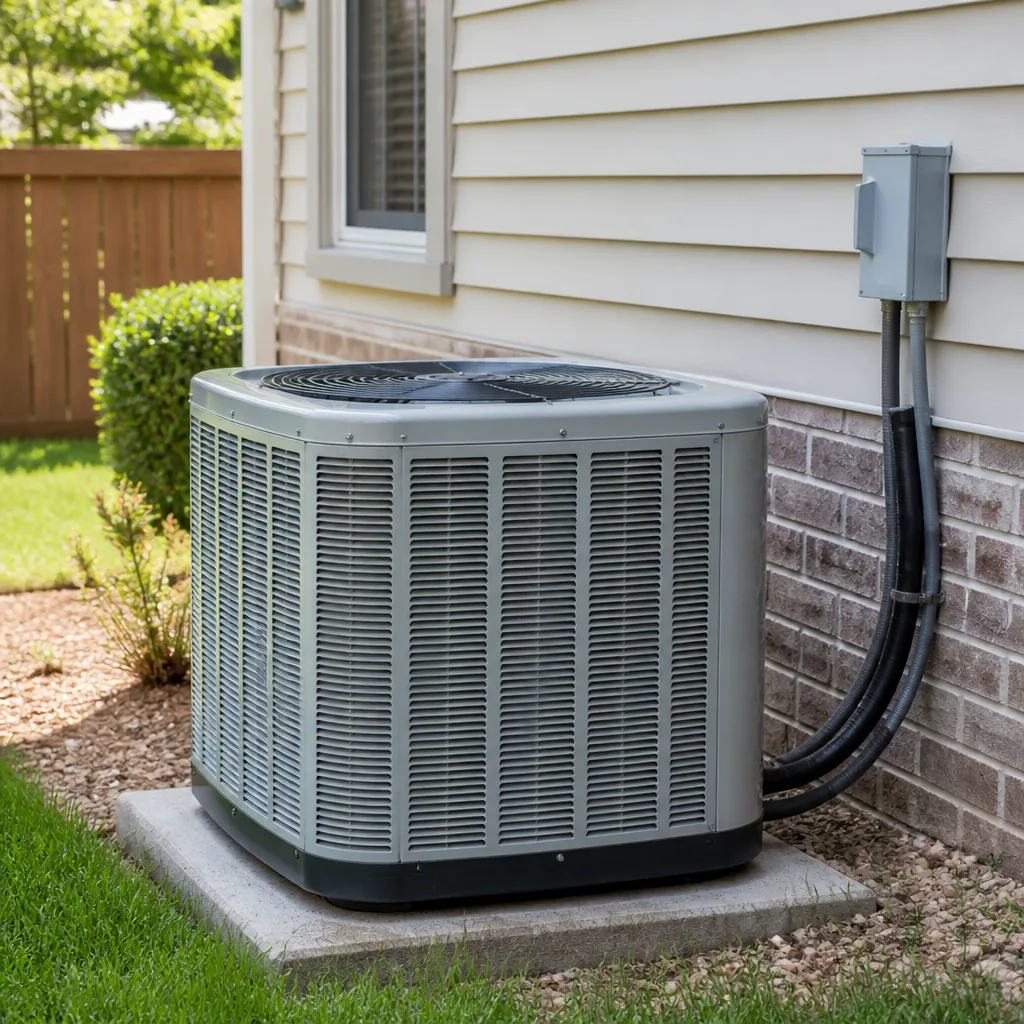
- Clean the condenser coil. Las Vegas dust, cottonwood fibers from spring trees, and construction debris settle on the outdoor coil all winter. A coated coil runs hotter, draws more power, and shortens compressor life. If you can see a mat of gray fuzz on the coil fins, it’s already costing you money.
- Test the capacitor. A multimeter reading takes five minutes. A capacitor reading more than 10 percent below its rated microfarad value is a replacement candidate. Most capacitor failures give no warning sound or visual clue.
- Check refrigerant pressure. Low refrigerant means there’s a leak somewhere, and adding refrigerant without finding the leak is like putting air in a tire with a nail in it. A pressure check in April gives you time to find and fix the leak before the system runs hard.
- Inspect and replace the air filter. This is the one task you’ll repeat monthly through October. A clogged filter restricts airflow, which drops cooling capacity and can freeze the evaporator coil. In the dry, dusty Las Vegas air, filters load up faster than in most of the country.
- Test the thermostat. Calibrate it against a separate thermometer. A thermostat reading 3 degrees off means your system runs longer than it should, every single day, all summer.
This is also the window to replace an aging system if you’ve been nursing one along. Contractors have open schedules in March and April, and you will get a better price and a more careful installation than during a July emergency replacement when everyone is running six calls behind. If your system is over 12 years old and the last repair bill stung, getting an honest replacement quote now beats waiting for a compressor failure at 4:00 p.m. on the hottest day of the year.
What should this cost? A seasonal AC tune-up in Las Vegas from a reputable company typically runs $89 to $189, depending on what’s included. A capacitor replacement is generally $150 to $300 installed. A refrigerant leak search and repair can range from $200 to over $1,000 depending on where the leak is and how much refrigerant must be added. Getting these numbers in writing before work starts is a Brandt HVAC standard every homeowner should expect from any contractor.
Phase 2: May – September – In-Season Monitoring and When to Wait vs. Call
From May through September, your AC will run more hours than most systems in the country run all year. Las Vegas cooling degree days regularly exceed 4,000 annually, which means sustained operation under extreme load. Your main job during this phase is watching for the subtle signals that something is degrading, not waiting for the system to stop.
Here’s what specific changes actually indicate:
- Thermostat reachability: If your system used to hit 74°F by 10:00 a.m. and now it’s still cycling at 76°F by noon, that’s not the weather. That’s lost capacity, and the cause is usually refrigerant, a failing compressor valve, or a dirty coil.
- Airflow changes: Walk past a supply vent and notice the force of the air. If one room feels weak, check that vent’s damper first, then check the filter. If the whole house feels weak, that’s a blower motor, duct leak, or frozen coil.
- Energy bill spikes: NV Energy bills in Las Vegas jump dramatically in summer. That’s normal. But a 30 percent spike compared to the same month last year, with the same thermostat setting and occupancy, is not normal. It means the system is working harder for the same output.
- Short cycling: If the outdoor unit turns on and off every five or ten minutes instead of running 15-20 minute cycles, something is wrong. Common causes in Las Vegas: low refrigerant, an oversized system, or an overheating compressor.
- Ice on the refrigerant line: The large copper line going into the indoor coil should never be iced over. Ice means low airflow or low refrigerant, and it is actively damaging the compressor.
When should you call someone, and when should you wait? Ice on the line, water leaking from the indoor unit, any electrical burning smell, or a total shutdown are all immediate calls. A gradually rising bill or a system that’s hanging on but running longer than it used to can wait a few days to a week, but not until the next heat wave. The 110°F days in Las Vegas are survivable with a limping system; what destroys equipment is a heat wave hitting a system that’s already compensating for a problem. Every extra week of running with low refrigerant or a weak capacitor takes life off the compressor.
One thing to know about Las Vegas specifically: our power grid sees enormous demand swings. Brief voltage sags during peak afternoon hours can damage capacitors and control boards over time. If you have an older system with a contactor that’s getting pitted, a sag can weld the contactor shut and keep the outdoor unit running even when the thermostat calls for off. A hard-start kit, which costs around $200 to $300 installed, gives the compressor an extra jolt on startup and protects against voltage sag damage. It’s one of the best-value upgrades available in this market.
And while we’re on the subject of monitoring: a smart thermostat pays for itself in Las Vegas faster than nearly anywhere else. A system that raises the setpoint while nobody’s home and pre-cools before peak rate hours genuinely saves 10 to 15 percent on cooling costs, and NV Energy’s time-of-use rates make that setup especially valuable. If your thermostat is still a dial from 1998, that’s a small upgrade with a fast return. Brandt HVAC Co Las Vegas home technicians install and set up smart thermostats with the schedule already programmed correctly, which is the step most people skip.
Phase 3: October – November – Monsoon Recovery and Heat System Readiness
Las Vegas monsoon season officially runs from June 15 to September 30, and even in a dry year, the storms move dust. Here’s what most homeowners don’t realize: that dust ends up inside your HVAC system, specifically packed onto the indoor evaporator coil and the blower wheel. After a particularly dusty monsoon season, we have pulled evaporator coils so caked with dust they looked like felt. A coil in that condition loses significant indoor airflow, which pushes your air conditioner to work harder right when it’s already been running for five months straight.
So the first task of Phase 3 is dust recovery. Schedule a full system cleaning if you noticed reduced airflow during the late summer or if you saw visible dust buildup around your return grilles. If your system’s been running clean, a standard fall check-up is probably enough.
The second task surprises a lot of Las Vegas homeowners: test the heat now, not in December. In a city where most people don’t turn on their furnace until the first genuinely cold night, the furnace’s one annual test tends to happen at 9:00 p.m. on a night when the low is hitting 35°F. If there’s a problem, you’re now waiting in a cold house until a tech can get out. October is the month to fire up the furnace for a test run: ten minutes of heat, check for the gas smell at startup, listen for any rumbling or rattling, and confirm the blower fan works at furnace speed, not just AC speed.
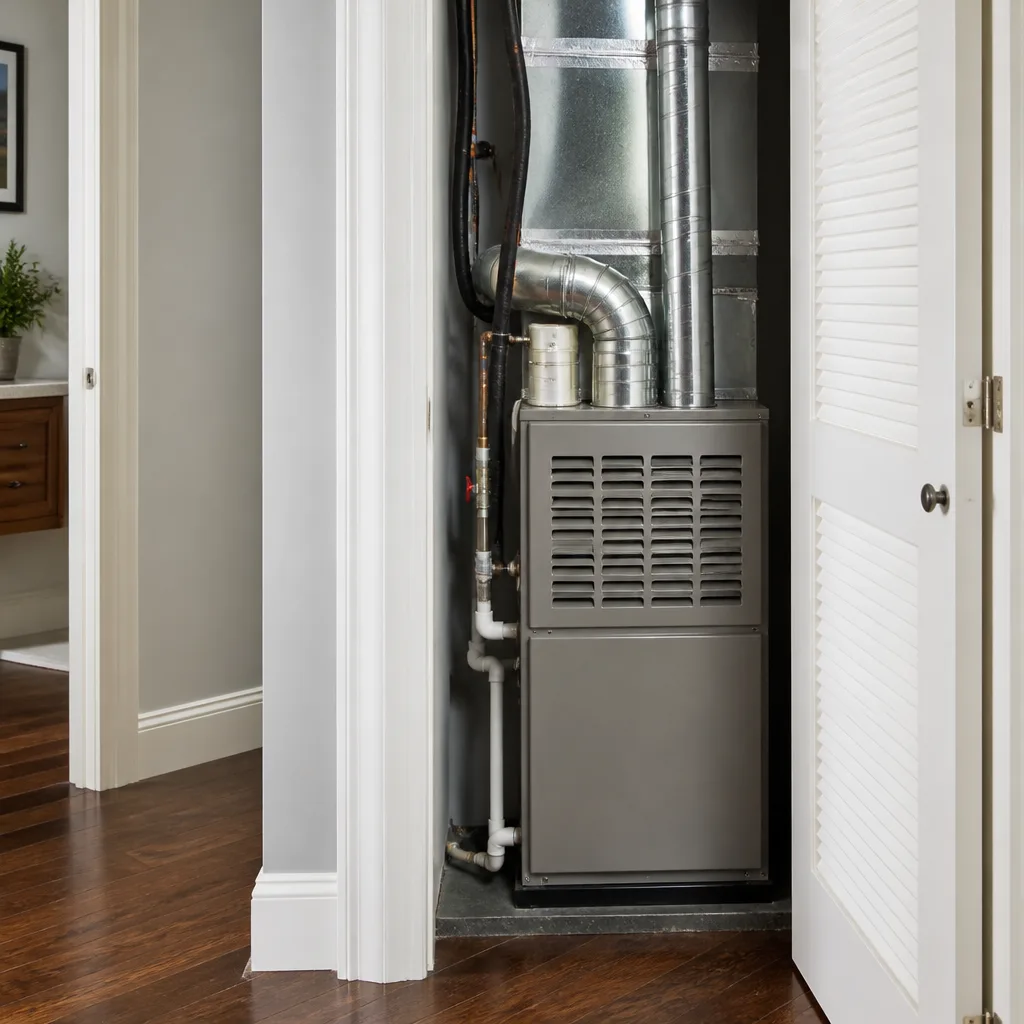
The key furnace check is the heat exchanger. In a gas furnace, the heat exchanger is the metal chamber that holds the combustion flame and transfers its heat to the air that blows through your house. Over time, especially in a desert climate with wide temperature swings, the metal expands and contracts thousands of times. Heat exchangers in Las Vegas see more of this thermal cycling than furnaces in more moderate climates, because our winter temperature swings are actually more extreme than many colder regions. A cracked heat exchanger leaks carbon monoxide into the air stream. This is not a scare tactic. It’s the single most important safety check in furnace maintenance, and it requires a professional to inspect properly.
After the furnace test, do the same dust check you did on the AC side: replace or clean the filter before heating season, and make sure return grilles are unobstructed. Furniture pushed against a return in the summer gets moved around, and a blocked return starves a furnace just as much as it starves an air conditioner.
This phase is also the right time to call for furnace repair in Las Vegas if your test run revealed any problem. Furnace parts in Las Vegas don’t get used much, which means they tend to fail from age and corrosion rather than wear and tear. A pilot assembly or igniter that’s been sitting for eight months is more likely to fail than one running weekly. Getting it fixed in October is the difference between a scheduled repair and a cold-night emergency.
Phase 4: December – February – Desert Heating Season and Carbon Monoxide Vigilance
Las Vegas heating needs are modest compared to, say, Minneapolis. But the system still does real work, and the risks are different. In January, a typical Las Vegas night drops to the low 40s, with occasional frost. Your furnace will run every morning and evening. If it fails, you’re not in a life-threatening freeze, but you are uncomfortable, and pipes in poorly insulated walls have frozen in Las Vegas more than once.
The bigger issue during heating season is carbon monoxide. Gas furnaces produce CO as a byproduct of combustion, and they’re designed to vent it outside through the flue. When all is well, that works perfectly. When it doesn’t work, the causes are either a cracked heat exchanger (which we covered above) or a blocked or misdirected exhaust vent. In Las Vegas, winter winds can be strong, and an improperly terminated flue can get blocked by debris or even by pest nests built during the fall. The danger is real, and it’s the reason every home with a gas furnace should have a working carbon monoxide detector within 15 feet of every sleeping area. If your CO detector is older than seven years, replace it. The sensor ages out.
Maintenance tasks during Phase 4 are lighter than the other phases. Your job is mostly vigilance:
- Listen for unusual furnace sounds on startup. A bang or thump when the burners ignite is usually delayed ignition, which means gas is building up before it lights. It’s not normal and it’s not safe to ignore.
- Smell the air around the furnace. A brief gas smell at startup is normal for most furnaces. A persistent gas smell means shut the furnace off, shut the gas valve off at the unit, open windows, and call a professional immediately.
- Check the filter monthly. Heating season in Las Vegas means dust in the air from the desert winds, and the furnace filter is doing the same job it did in cooling season.
- Watch for the flame color. If you can see the burner flame through a sight glass, a healthy gas flame is blue and steady with a little yellow at the tip. A yellow or orange, flickering flame means incomplete combustion, and that’s a sign of a dirty burner or insufficient air intake.
For most Las Vegas homeowners, the furnace is the system’s smaller role, but it’s the one with the real safety stakes. An air conditioner fails and the house gets hot; a furnace fails and the house gets cold, and in rare cases, a furnace fails badly and the house becomes dangerous. That asymmetry is why we treat heating season checks with the seriousness we do.
Your 12-Month Las Vegas HVAC Calendar
Here’s the whole year on one page. Each month has one primary task, the outcome it produces, and the go/no-go line for calling a professional.
January
Task: Replace the air filter and do a CO alarm battery check.
Outcome: Maintained airflow and verified CO protection.
Call a pro if: The furnace is cycling on and off more than normal or the CO alarm has sounded.February
Task: Listen to the furnace during morning startup. Check for bangs, rumbles, or gas smells.
Outcome: Early detection of delayed ignition or heat exchanger problems.
Call a pro if: You hear a bang at ignition or smell gas that doesn’t dissipate within a few seconds.March
Task: Schedule the pre-season AC tune-up. Clean the outdoor unit area of debris and leaves.
Outcome: System checked and ready before demand hits.
Call a pro if: You noticed reduced cooling performance at the end of last summer and haven’t addressed it.April
Task: Test the AC for a full 30-minute cycle. Verify the thermostat reaches the setpoint. Replace the air filter.
Outcome: Confirmation the system can hold temperature before the heat arrives.
Call a pro if: The system can’t reach the setpoint, short cycles, or makes any new sound.May
Task: Monitor the first full month of cooling. Note the thermostat behavior on 95°F+ days.
Outcome: Baseline performance data for the summer.
Call a pro if: The bill is more than 20 percent higher than last May with the same usage patterns.June
Task: Replace the air filter. Check supply vents for weak airflow in any room.
Outcome: Even cooling throughout the house.
Call a pro if: Any room is noticeably warmer than the rest of the house with vents open.July
Task: Peak stress month. Watch for short cycling, listen to the outdoor unit during startup, replace the filter.
Outcome: Early warning of compressor stress before the hottest weeks.
Call a pro if: The outdoor unit is turning on and off every few minutes, ice appears on the copper line, or the breaker trips.August
Task: Monsoon dust check. Inspect the area around the return grilles for visible dust accumulation. Replace filter more frequently if monsoon active.
Outcome: Reduced dust load on the indoor coil.
Call a pro if: Airflow from the vents is noticeably weaker than it was in June.September
Task: End-of-season assessment. Make notes of any intermittent issues, odd sounds, or comfort complaints.
Outcome: A punch list for the fall maintenance visit.
Call a pro if: You’ve been nursing any problem you’d rather not carry into next summer.October
Task: Fire up the furnace for a test run. Schedule the fall maintenance visit, including heat exchanger inspection, if you didn’t do one in spring.
Outcome: A confirmed-working furnace before the first cold night.
Call a pro if: The furnace won’t light, blows cold air, or smells like gas.November
Task: Replace the air filter. Check CO detector function again. Verify the thermostat switches properly between heat and cool.
Outcome: Ready for active heating use.
Call a pro if: The system won’t switch modes or the furnace runs for a few minutes and then shuts off.December
Task: Monitor furnace during regular morning runs. Listen for unusual sounds. Change filter if it’s been in service through fall dust.
Outcome: Catch heating problems in their early stages.
Call a pro if: Any of the Phase 4 warning signs appear – delayed ignition, yellow flame, persistent gas smell.Common Mistakes to Avoid
- Skipping the October furnace test. Every year, Las Vegas homeowners discover their furnace doesn’t work on the first cold night of December. A ten-minute test in October catches it months early.
- Ignoring a rising summer bill. A bill that climbs 20 to 30 percent with no change in usage is almost always a system efficiency problem, not a rate increase. Waiting means paying more every month and accelerating the system’s decline.
- Running a clogged filter for months. In Las Vegas, a filter that would last 90 days in other climates can clog in 30. The dust load is that high. A dirty filter is the most common cause of frozen coils and weak airflow we see.
- Adding refrigerant without finding the leak. Topping off a leaking system is a temporary fix that will cost you again, and a system that leaks refrigerant is both inefficient and damaging to the compressor. A proper leak search and repair is the only real fix.
- Replacing a capacitor with the wrong microfarad rating. It happens more often than it should. A wrong-size capacitor will burn out the compressor motor over time. The right part, installed correctly, is a $250 repair that prevents a $3,000 compressor replacement.
- Neglecting the CO detector. A furnace with a cracked heat exchanger is rare, but a home without a working CO detector has no way to know if it happens. Detectors are cheap, the failure mode is catastrophic, and the math is easy.
- Scheduling maintenance in the middle of July. A tune-up mid-season is better than nothing, but the real value of maintenance is finding problems before the system is working at full load. Spring and fall checks are the right rhythm.
When to Call a Professional
Some tasks in this guide are homeowner-level: changing filters, checking CO detectors, listening for unusual sounds, and watching for airflow changes. For deeper background, see The Complete Guide to HVAC in Las Vegas. Others genuinely require a trained tech: refrigerant pressure and leak detection, capacitor testing and replacement, heat exchanger inspection, and any electrical work inside the cabinet. The line between do-it-yourself and call-someone is the line between a safe task and a dangerous or system-damaging one. High-voltage electricity is inside every HVAC cabinet, and when it comes to gas, the stakes are self-evident.
A diligent homeowner with this calendar will catch problems early. The next step is knowing who to call. AC repair in Las Vegas shouldn’t come with a door-opening surprise. Brandt HVAC Co Las Vegas offers free estimates at (725) 502-1353, with a written price before any work starts and every technician introduced by name and photo before arrival.
Frequently Asked Questions
In Las Vegas, schedule professional maintenance twice a year: once in March or April before the cooling season begins, and once in October or November before the heating season begins. The spring visit focuses on the air conditioning side – coil cleaning, capacitor testing, refrigerant check – while the fall visit covers the furnace, including a heat exchanger inspection and a full heating test cycle. Twice-a-year service catches failures at the two transition points where most Las Vegas HVAC breakdowns occur.
Seasonal HVAC maintenance in Las Vegas typically costs $89 to $189 per visit, depending on what’s included and which company you choose. Discounted tune-ups under $50 usually consist of little more than a filter check and a visual once-over, and we’d tell you to be skeptical of them. The value in real maintenance is the testing: capacitor load test, refrigerant pressure check, coil cleaning, and burner inspection. A written price before any work starts should be standard. Call (725) 502-1353 for a specific quote.
Yes for the simple tasks: changing air filters monthly during peak season, keeping the outdoor unit clear of debris, checking CO detectors, and listening and watching for the warning signs described in this guide. No for anything involving refrigerant, electrical components, gas combustion, or the sealed parts of the system. Those tasks carry risk of injury or equipment damage and are best left to a licensed professional with the right tools and training.
In Las Vegas, change your air filter monthly during the peak cooling months of May through September, and every 30 to 60 days the rest of the year. The desert air carries fine dust that loads filters far faster than the 90-day rating printed on the package. Homeowners with pets or construction nearby may need to change filters even more often. A clogged filter reduces airflow, increases energy use, and can freeze the evaporator coil – which is a repair bill no one wants.
Furnaces that sit unused for eight months at a time, as they do in Las Vegas, commonly fail on first startup because parts degrade while idle. Igniters and pilot assemblies in particular corrode with age rather than wear, and a component that worked fine the previous March may not fire in December. Testing the furnace in October, during the transition period, catches this problem while you can schedule a repair at your convenience instead of shivering through a cold night.
For most Las Vegas homeowners, yes – but only if the plan includes real testing and a written report of what was found, not just a filter change and a visual check. A system that runs as many months per year as it does here needs twice-a-year service. The planned maintenance route means you never forget the spring and fall visits, and the early-warning benefit of a capacitor or leak found in April can save a thousand dollars or more in July. Whatever plan you choose, make sure you know exactly what’s included and that the company provides a written condition report each visit. You can also find more guides & resources on our blog.
The Bottom Line
Las Vegas gives your HVAC system a harder year than most homeowners realize: five months of sustained heat, dust that gets into everything, and wide temperature swings that stress every metal component in the system. The calendar in this guide turns that challenge into a routine. Two professional maintenance visits per year, a monthly filter check during peak months, an October furnace test, and a working carbon monoxide detector. Those are the fundamentals. Everything here is about catching the problem in the transition period, while it’s still cheap, instead of in the middle of the season when it’s not. If a surprise does show up, you want a technician you already know is coming, a written price before anything starts, and a repair that’s guaranteed in writing. That’s the standard every Las Vegas homeowner should expect, and it’s exactly how Brandt HVAC Co Las Vegas home operates.
Written by Devin Marlowe, Owner at Brandt HVAC Co Las Vegas, serving Las Vegas since 2003.
See the difference
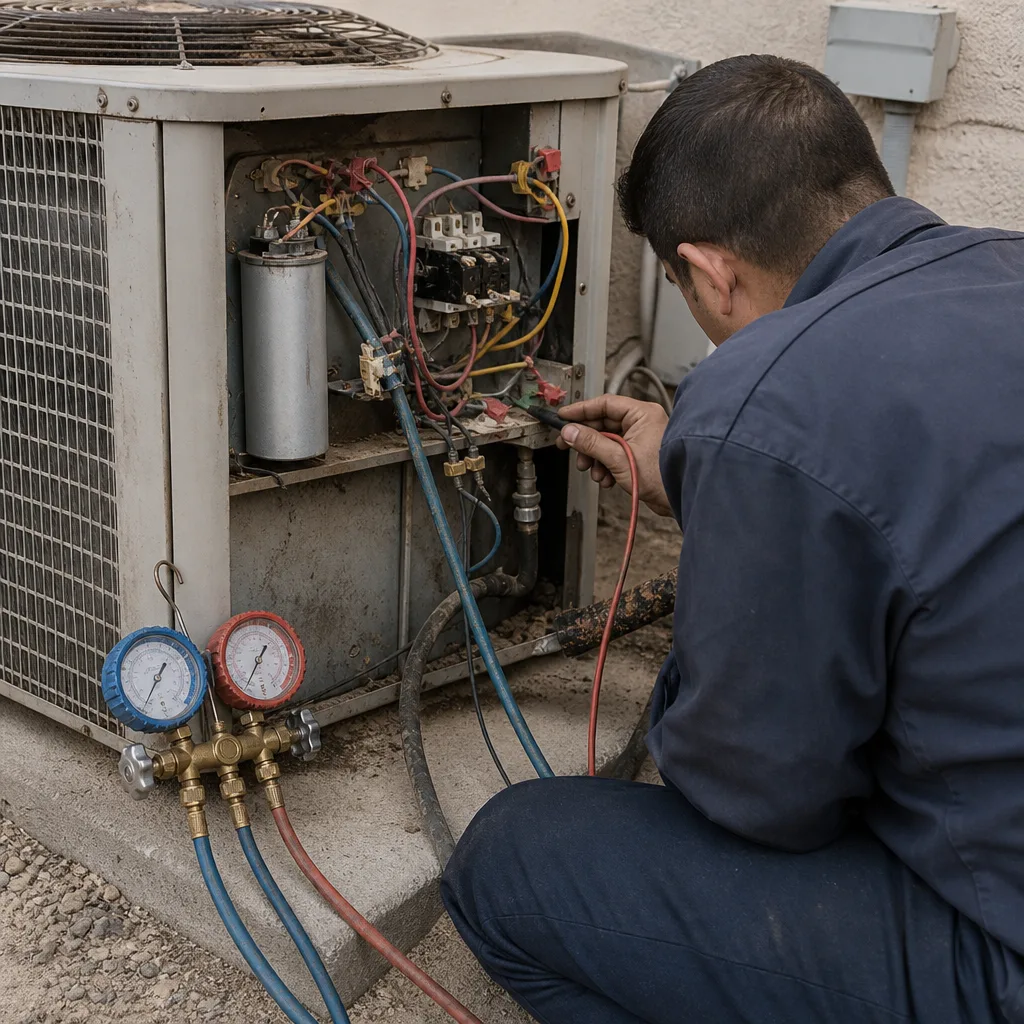 Before
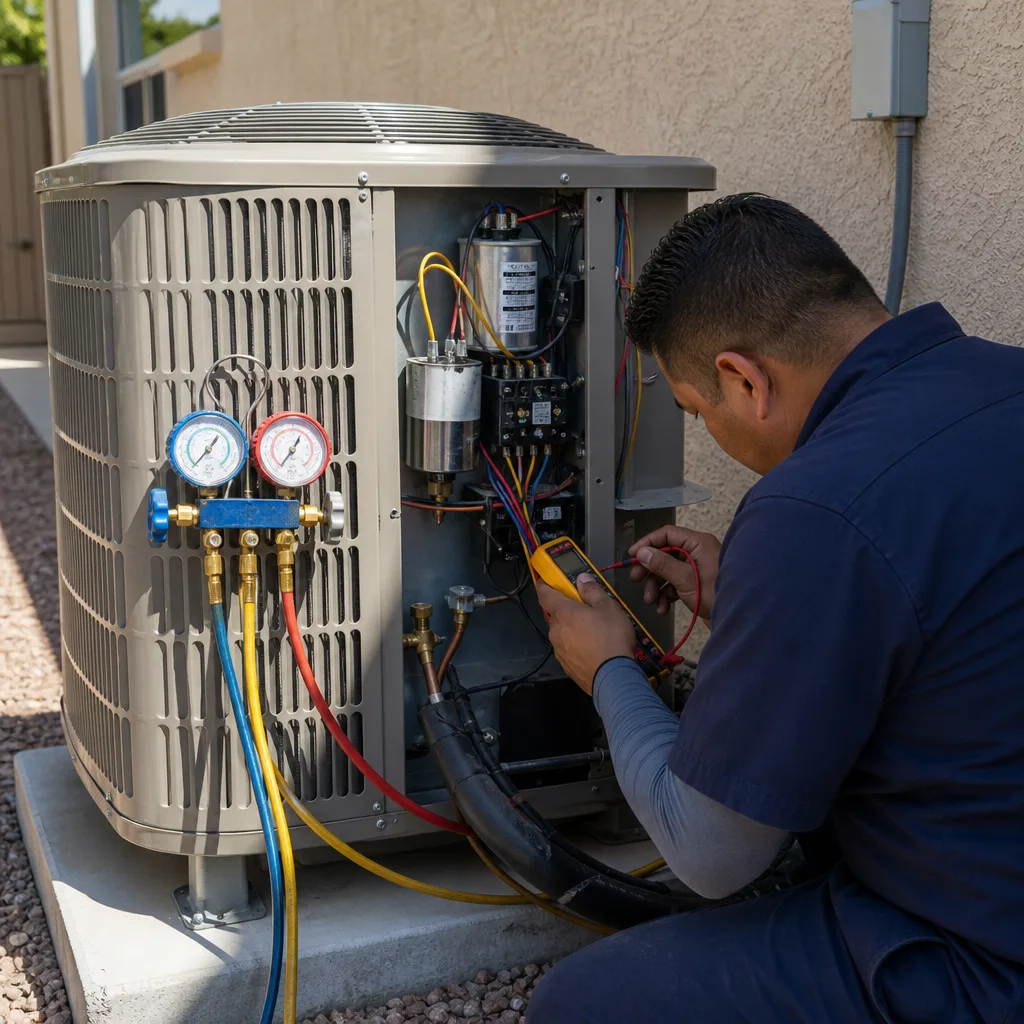 After
After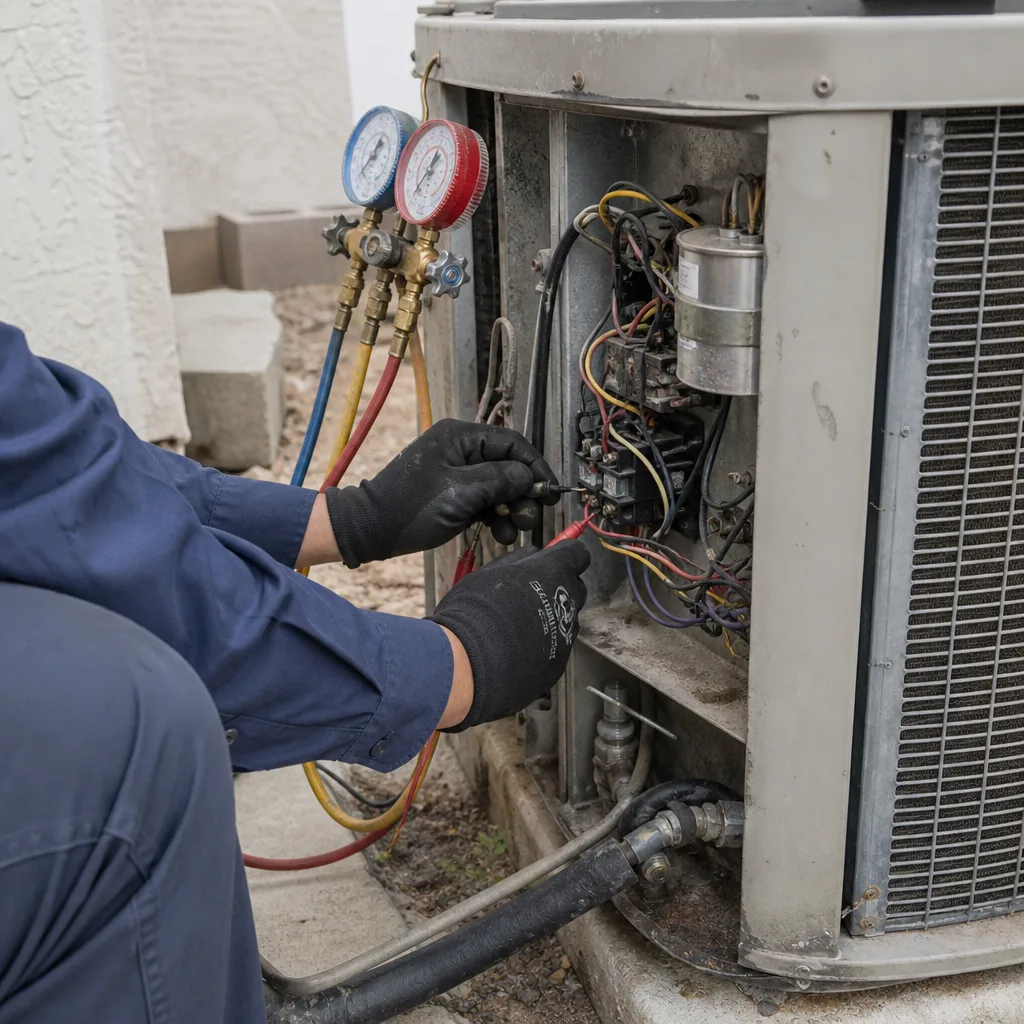 Before
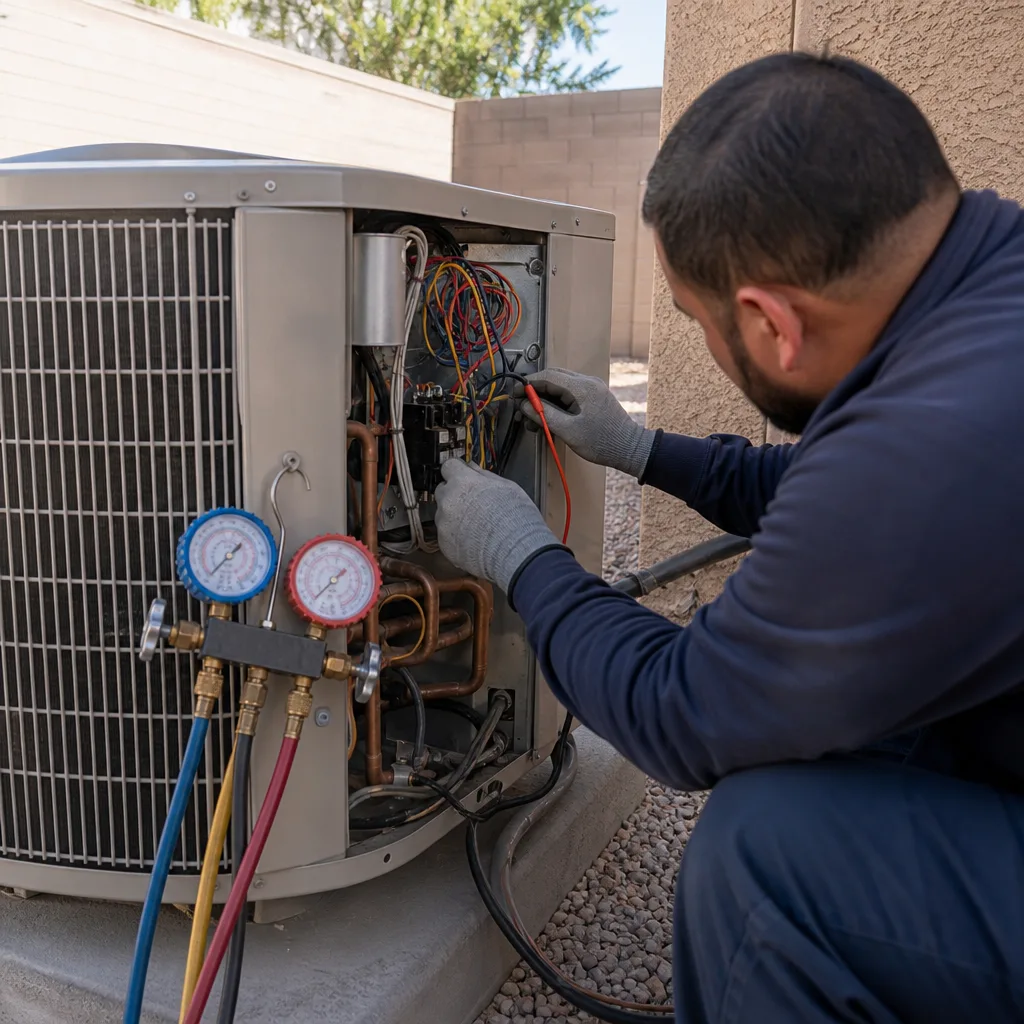 After
After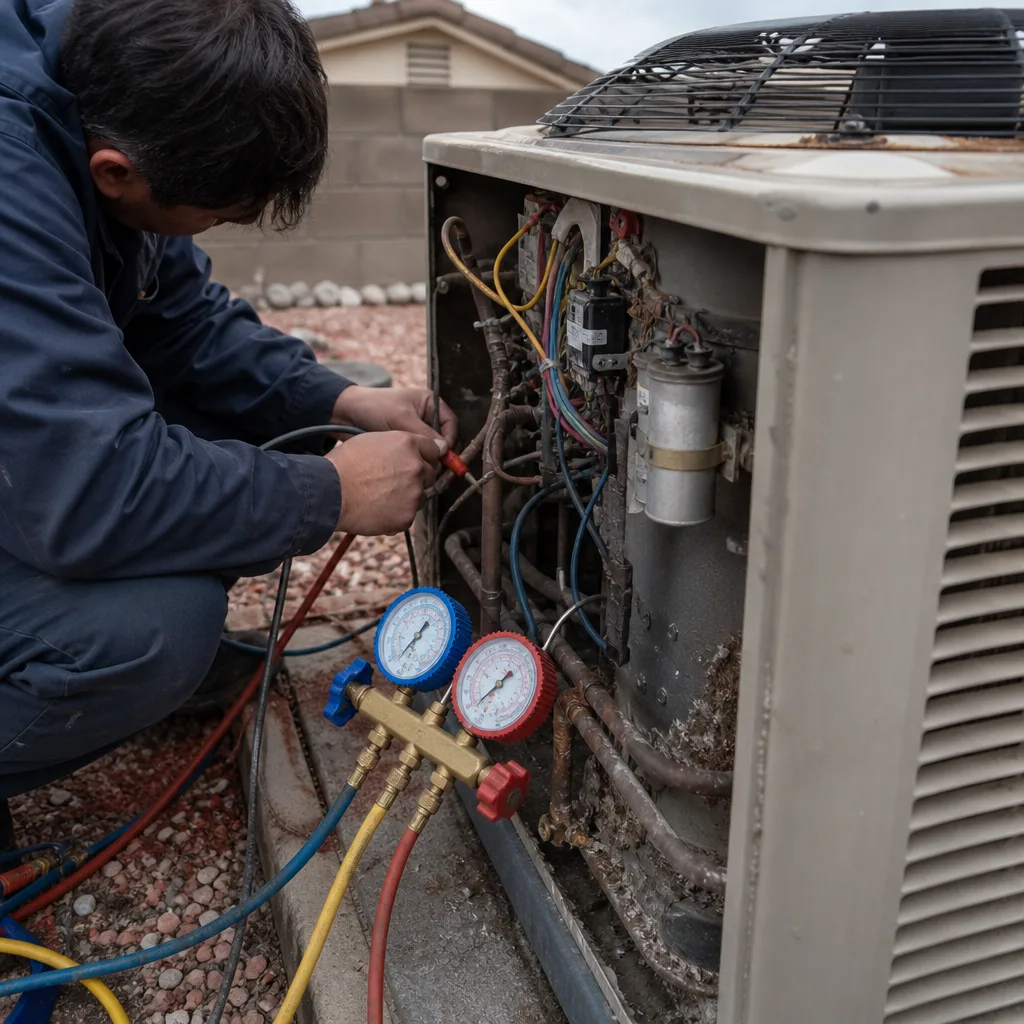 Before
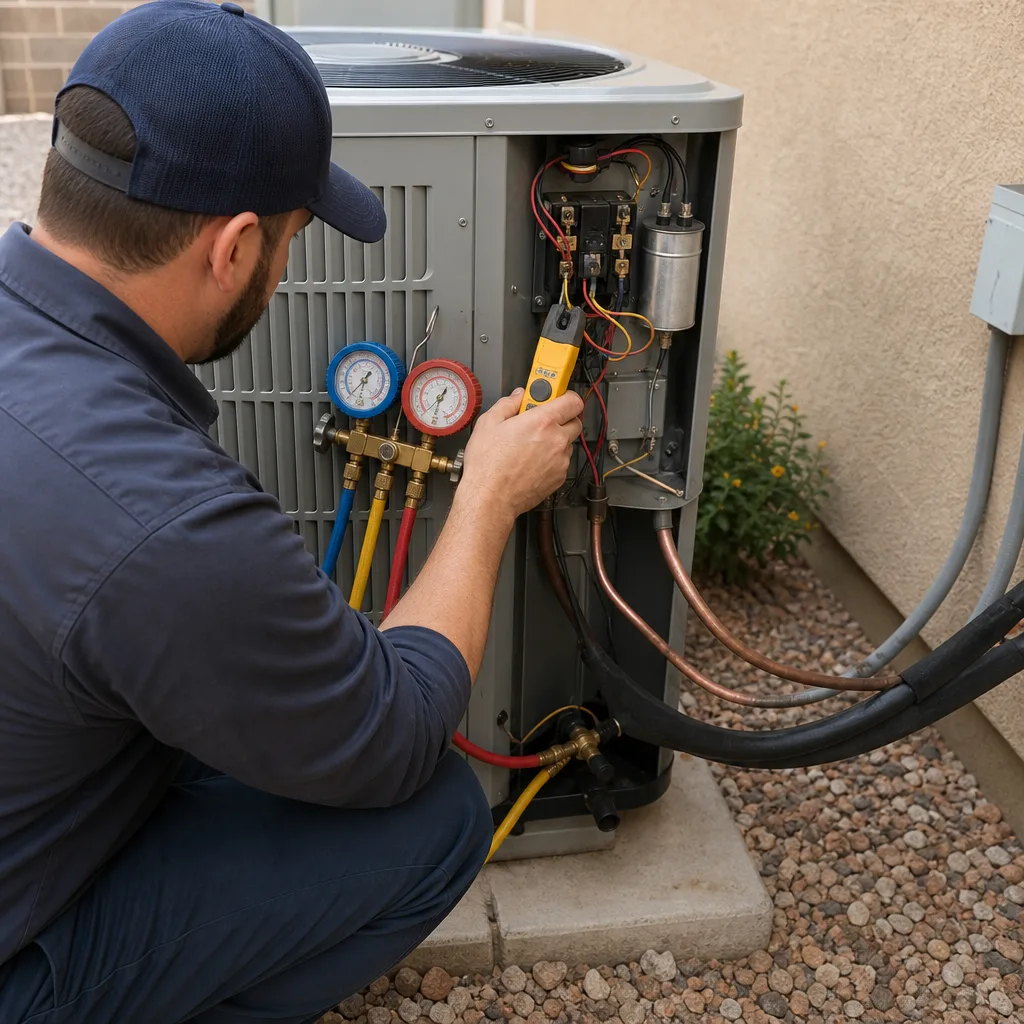 After
After